Restorations
Dental bridges: replacing one to three missing teeth
A dental bridge can replace one to three missing teeth by attaching an artificial tooth to nearby support teeth or implants. This page explains the main bridge types, materials, steps, lifespan, and real-world costs in plain language.
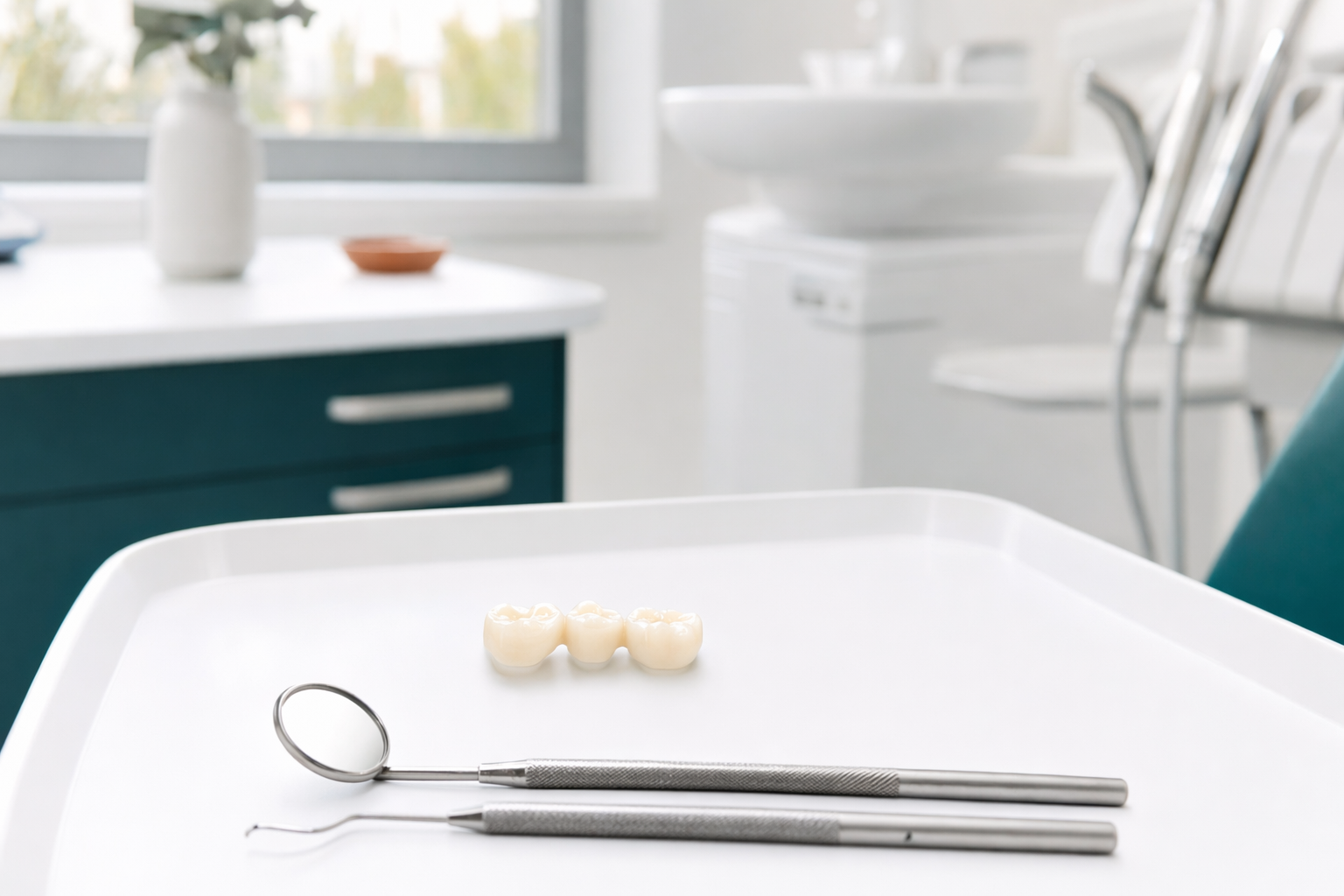
What a dental bridge is
A dental bridge is a fixed tooth replacement. It fills a gap where one tooth is missing, and sometimes two or three nearby missing teeth, by connecting replacement teeth to support on one or both sides.
The support can come from natural teeth, dental implants, or in some cases a bonded metal wing behind a nearby tooth. The replacement tooth in the middle is often called a pontic, but you do not need to remember the term. What matters is that a bridge is meant to stay in place rather than come in and out like a partial denture.
Common bridge types include:
- Traditional bridge: supported by crowns placed on teeth on both sides of the gap
- Cantilever bridge: supported on one side only
- Maryland bridge: bonded to the back of a nearby tooth, often with metal or ceramic wings
- Implant-supported bridge: attached to implants instead of natural teeth
A bridge may be considered when you want a fixed option and the teeth or implants next to the gap can support it. Which type fits best depends on your mouth, bite, bone support, gum health, and where the missing tooth is. Only a licensed dentist or prosthodontist who examines you can tell you whether a bridge is appropriate.

What bridges are made of: materials and trade-offs
Bridges are usually made from porcelain fused to metal, all-ceramic materials such as zirconia or other dental ceramics, or a mix of materials depending on the location in the mouth. The right material is not only about looks. It is also about strength, bite forces, space, and how the bridge will be supported.
Porcelain fused to metal has been used for many years. It is often durable and may work well in many parts of the mouth, but in some cases a dark line can show near the gum over time. All-ceramic bridges can look very natural, especially in visible front areas, but the exact ceramic matters because some are stronger than others.
Maryland bridges usually use a metal or ceramic framework bonded to a nearby tooth. They can be more conservative because they may require less drilling, but they may not be as suitable in every bite or every location. Cantilever bridges may work in selected cases, but placing support on one side can increase leverage and stress.
Implant-supported bridges do not rely on neighboring natural teeth for support. That can help preserve those teeth, but implants usually add time, surgery, and cost. A dentist will balance appearance, chewing forces, gum line, and long-term maintenance when discussing materials and design.
How the dentist does it: visits and process
The process depends on the bridge type. A traditional bridge usually takes at least two visits, and sometimes more. An implant-supported bridge usually takes longer because implant treatment and healing may happen before the bridge is made.
For a bridge that uses natural teeth for support, the general process often looks like this:
1. Exam, X-rays, and a discussion of options
2. Shaping the support teeth if crowns are needed
3. Impressions or digital scans to design the bridge
4. A temporary bridge in some cases
5. Final bridge try-in, bite check, and cementing or bonding
For a Maryland bridge, the dentist may do less shaping of the support tooth. For an implant-supported bridge, the process may include implant placement, healing time, and then the bridge after the implants are ready.
After placement, the dentist may need to adjust the bite so the bridge does not carry too much pressure. Cleaning under a bridge is different from cleaning a natural tooth gap, so patients are usually shown special floss threaders or other tools. This is general information only, not treatment advice.
How long a bridge lasts
Many bridges last roughly 5 to 15 years, and some last longer. A well-made bridge in a healthy mouth with good cleaning and regular dental care may last many years, but there is no guaranteed lifespan.
How long it lasts depends on:
- The bridge type and material
- How many teeth are being replaced
- The health of the support teeth, gums, or implants
- Bite forces, grinding, or clenching
- Daily cleaning and regular checkups
- Smoking and general oral conditions
A bridge can fail if a support tooth gets decay, if cement loosens, if the material chips or breaks, or if gum and bone support worsen. That does not mean bridges are a poor choice. It means they need good design, good fit, and maintenance over time.
Cost: honest ranges and what changes the price
In the United States, a dental bridge often costs about $2,000 to $5,000 for a basic fixed bridge replacing one tooth with support from nearby crowned teeth. More complex bridges, stronger or more esthetic materials, extra lab work, or replacing more teeth can push the total higher. Implant-supported bridges often start much higher and may range from about $4,000 to $15,000 or more depending on the number of implants, the number of teeth, and whether extra procedures are needed.
These are broad ranges, not quotes. The real number depends on the material, the number of teeth, the condition of the support teeth or implants, your bite, the dentist and lab, and the area of the country. Costs in large metro areas are often higher than in smaller markets.
What can raise the price:
- More missing teeth or a longer bridge span
- Need for crowns on support teeth
- Higher-end ceramic or zirconia materials
- Implant placement and healing stages
- Bone grafting, gum treatment, or other related procedures
- A specialist's fees or a more complex bite case
What can lower the price in some cases:
- A simpler design
- Fewer units in the bridge
- Using existing healthy support conditions instead of adding implants
- Regional fee differences
If you are comparing offices, ask for a written treatment plan and written price before you start. Be careful with vague pricing, same-day pressure to begin treatment, no written plan, no second opinion offered on a big case, or cash-only demands without clear documentation. You can also review general costs and compare options before deciding.
Who bridges may suit, alternatives, and how to find the right dentist
A bridge may be one option for a person missing one to three teeth, especially if they want a fixed restoration and there is reasonable support next to the gap. In some cases, a single implant, a removable partial denture, or another plan may also be discussed. One option is not automatically better for everyone. The trade-off is often between preserving nearby teeth, total cost, treatment time, surgery, and long-term maintenance.
A traditional bridge may be faster than an implant plan, but it often requires shaping nearby teeth if those teeth are being used as supports. An implant may avoid preparing neighboring teeth, but it usually costs more and takes longer. A removable partial denture may cost less up front, but it comes out for cleaning and feels different from a fixed bridge. Your dentist should explain the pros and trade-offs of each option for your own mouth.
When choosing a provider, look for a licensed dentist or prosthodontist with experience in restorative work. Verify the state license. Ask how often they do bridges like yours, who makes the lab work, what material they are recommending and why, and how they handle fit and bite adjustments. For big or expensive plans, a second opinion is reasonable.
RestoreBite is a free matching service, not a dental practice, and we do not provide dental care. We can help you connect with licensed restoration dentists near you through our services and get matched pages. We only collect contact details and the restoration type you are asking about, such as your name, phone, optional email, ZIP code, preferred language, and whether you are asking about a bridge. We do not ask for medical or dental history.
Before you choose care, use a checklist like questions to ask before a restoration. Get a written treatment plan, written price, the type of bridge proposed, the material, the expected number of visits, and what follow-up may be needed.

A dental bridge is a fixed way to replace one to three missing teeth, but the best type, material, and cost depend on your mouth, the support available, and getting a written plan from a licensed dentist.
Common questions
Is a bridge better than an implant?
Not automatically. A bridge and an implant solve the problem in different ways, with different costs, timelines, and effects on nearby teeth. A licensed dentist who examines your mouth can explain which options are realistic for you.
Can a bridge replace two or three missing teeth?
Sometimes yes, especially if the missing teeth are next to each other and there is enough support. The design has to match the location, bite forces, and condition of the supporting teeth or implants.
Does getting a bridge hurt?
People often have questions about comfort, but the experience varies by the type of bridge and the work needed on support teeth. Ask the treating dentist to explain the steps, numbing, and what recovery usually feels like in your case.
How do you clean under a dental bridge?
Cleaning under a bridge is different from cleaning a normal tooth space. Dentists often recommend special floss threaders, small brushes, or other tools to clean under the replacement tooth and around the supports.
Will insurance pay for a dental bridge?
Sometimes, but coverage varies a lot by plan, waiting periods, annual maximums, and whether the bridge is considered a covered major service. Always ask for a written estimate from the dental office and confirm benefits with your insurer.
What are warning signs when comparing dental offices for a bridge?
Be careful with vague pricing, pressure to start the same day, no written treatment plan, no second opinion offered for a large case, or cash-only demands without clear paperwork. Verify the dentist's state license and get the plan and price in writing first.