Restorations
Dental crowns: caps that restore one tooth
A dental crown is a cap that covers and restores one damaged or weakened tooth. This page explains how crowns work, common materials, typical costs, and how to compare dentists carefully.
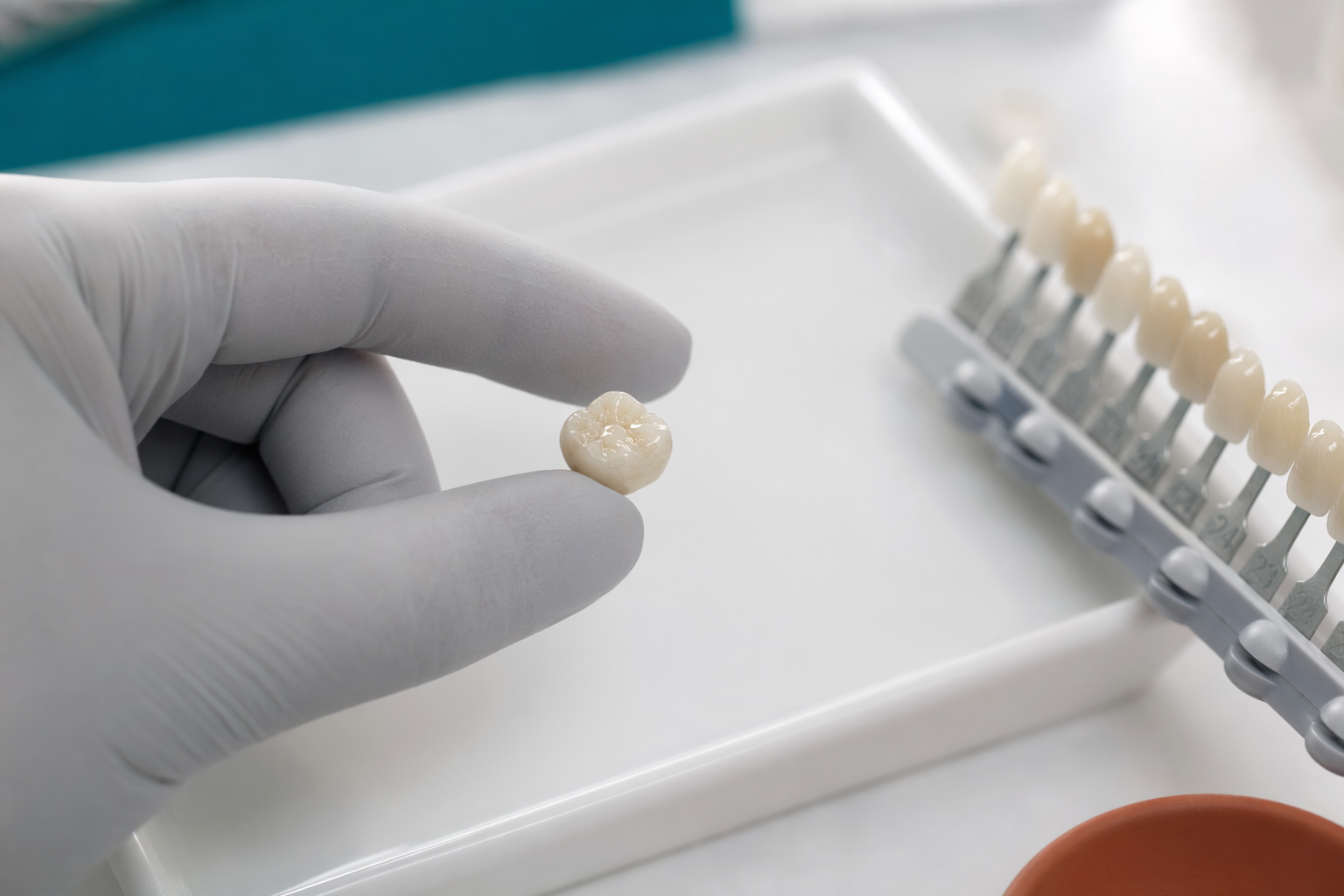
What a dental crown is
A dental crown is a custom-made cap that fits over one tooth. Dentists use crowns to restore a tooth that is badly broken, worn down, heavily filled, root-canal treated, or shaped in a way that needs more strength and coverage.
A crown is different from a filling. A filling repairs part of a tooth. A crown covers most or all of the visible tooth above the gumline. The goal is usually to restore shape, strength, chewing function, and appearance.
Crowns can be made to match nearby teeth, but not every crown material looks or wears the same way. The best choice depends on the tooth, the bite, the amount of remaining tooth, the person's goals, and the dentist's judgment after an exam. This is general educational information only, not treatment advice.

What crowns are made of: common materials and trade-offs
Several crown materials are commonly used in the United States. Each has trade-offs in strength, appearance, thickness, cost, and how much tooth may need to be shaped.
- Zirconia: Very strong and widely used, especially on back teeth. It can work well where biting force is high. Some zirconia crowns are more opaque than natural enamel, though newer versions can look better than older ones.
- E.max (lithium disilicate): Often chosen when appearance matters, especially for front teeth and some visible side teeth. It can look very natural, but whether it is suitable depends on the tooth and bite.
- PFM (porcelain fused to metal): A metal base with porcelain on top. This has been used for many years and can be durable, but the metal can sometimes affect appearance, and a dark line near the gum may show over time.
- Gold or other metal alloy: Very durable and gentle on opposing teeth in many cases. It does not look tooth-colored, so it is usually used where appearance matters less.
No material is perfect. Stronger is not always better-looking, and better-looking is not always best for a heavy bite. A licensed dentist or prosthodontist who examines the mouth can explain why one material may be reasonable over another for that specific tooth.
How the crown process usually works
A crown usually takes 1 to 2 visits, though some offices offer same-day crowns with in-office scanning and milling. The exact process depends on the office, the tooth, and whether other work is needed first.
- The dentist examines the tooth, takes X-rays or scans if needed, and explains whether a crown is one of the possible restoration options.
- The tooth is shaped so the crown can fit over it properly. If there is not enough tooth structure, additional build-up may sometimes be needed.
- An impression or digital scan is taken so the lab or machine can make the crown.
- If the final crown is not made the same day, a temporary crown is often placed.
- At the next visit, the dentist checks fit, bite, and appearance, then cements or bonds the final crown.
Some teeth need more than just a crown. For example, decay, cracks, gum issues, or root canal needs can change the plan, number of visits, and cost. That is why a written treatment plan matters.
If you have a true dental emergency such as severe swelling, high fever, uncontrolled bleeding, or a knocked-out tooth, seek urgent or emergency dental care first. RestoreBite is a free matching service, not a dental practice, and does not provide dental care.
How long crowns typically last
Many crowns last about 5 to 15 years, and some last longer. That is a broad range, not a promise. Real lifespan depends on the material, how much natural tooth is left, the bite, grinding or clenching, oral hygiene, gum health, and whether the crown is on a front or back tooth.
A crown can fail for different reasons: decay at the edge, a crack or chip, cement problems, gum recession, or problems with the tooth underneath. Even a well-made crown is not permanent.
Good brushing, flossing or other cleaning between teeth, regular dental visits, and addressing grinding if a dentist finds it can all matter. Ask the dentist what kind of maintenance the crown may need over time and what signs should be checked early.
What crowns cost, and what makes the price go up or down
In many parts of the US, a single dental crown often costs about $900 to $2,500 per tooth. In some areas or for certain materials, it may be lower or higher. These are general ranges, not quotes.
Price usually depends on:
- the material used
- which tooth is being restored
- whether the office uses an outside lab or same-day technology
- the dentist's training and local market
- whether more work is needed first, such as a core build-up, root canal treatment, crown lengthening, or replacing a temporary
- your city and state
Dental insurance may help in some cases, but coverage rules, waiting periods, annual maximums, and exclusions vary a lot. Ask for the full written fee before treatment starts, including any related charges. Vague pricing, pressure to start the same day, no written treatment plan, no second opinion offered on a big plan, and cash-only demands are signs to slow down and ask more questions.
You can learn more about broader restoration pricing at costs.
Who crowns may suit, alternatives, and how to find a dentist who does crowns well
A crown may be one option when a single tooth needs more coverage and strength than a filling can provide. But a crown is not the only restoration used for one tooth. Depending on the tooth and what remains, a dentist might also discuss a filling, inlay, onlay, veneer, extraction with replacement, or watching the tooth for now. Which options are reasonable depends on an exam, X-rays, the bite, and the goals for appearance and function.
When comparing dentists, look for someone licensed in your state who regularly does restorative work. For complex bite, wear, or appearance cases, some people also look for a prosthodontist, a dentist with advanced training in restoration and replacement of teeth.
Use this checklist before you say yes:
- Verify the dentist's state license.
- Ask what crown materials they use and why.
- Ask whether they use a lab and whether they can show examples of similar crown work.
- Ask how many visits are expected and whether a temporary crown is included.
- Ask for a written treatment plan and written price before any work begins.
- Ask what happens if the crown needs adjustment or replacement.
- Ask whether a second opinion makes sense, especially for larger or expensive plans.
RestoreBite can help you get matched with licensed restoration dentists near you. The service is free for patients. We only collect contact details, ZIP code, preferred language, and the type of restoration you are asking about so we can help connect you. We do not collect medical or dental history through the matching form.
You can also review questions to ask before a restoration or browse other services.

A dental crown is a custom cap for one tooth, and the smart next step is to compare licensed dentists, materials, and written prices before you decide.
Common questions
Is a crown the same as a cap?
Yes. "Cap" is a common everyday word for a dental crown. Dentists usually say "crown," but both mean a covering made to fit over one tooth.
Does getting a crown hurt?
Many people are numb during the tooth preparation part, so they do not feel sharp pain during the procedure. Comfort, soreness afterward, and the need for numbing vary by tooth and person, so ask the treating dentist what to expect.
Which crown material is best: zirconia, E.max, PFM, or gold?
There is no single best material for every tooth. The choice depends on appearance, biting force, tooth location, how much tooth remains, and the dentist's judgment after an exam.
How much does one crown cost without insurance?
A single crown often falls around $900 to $2,500 in many US areas, but the real price can be lower or higher. Material, local fees, and any extra work needed can change the total.
Can a crown be done in one day?
Sometimes. Some offices offer same-day crowns, while others send the case to a dental lab and place the final crown at a second visit.
How do I know if a dentist is overcharging for a crown?
Ask for a written treatment plan, the exact material, and a written price before treatment starts. Be cautious with vague pricing, pressure to begin immediately, no second opinion offered on a large plan, or no clear explanation of what the fee includes.
Can RestoreBite tell me if I need a crown?
No. RestoreBite is a free matching service, not a dental practice, so we do not diagnose or recommend treatment. A licensed dentist who examines you can explain whether a crown is one possible option.