Restorations
Full dentures: replacing all the teeth in an arch
Full dentures replace all the teeth in the upper arch, lower arch, or both. This page explains how they work, what they are made of, typical costs and trade-offs, and how to compare providers carefully.
What full dentures are
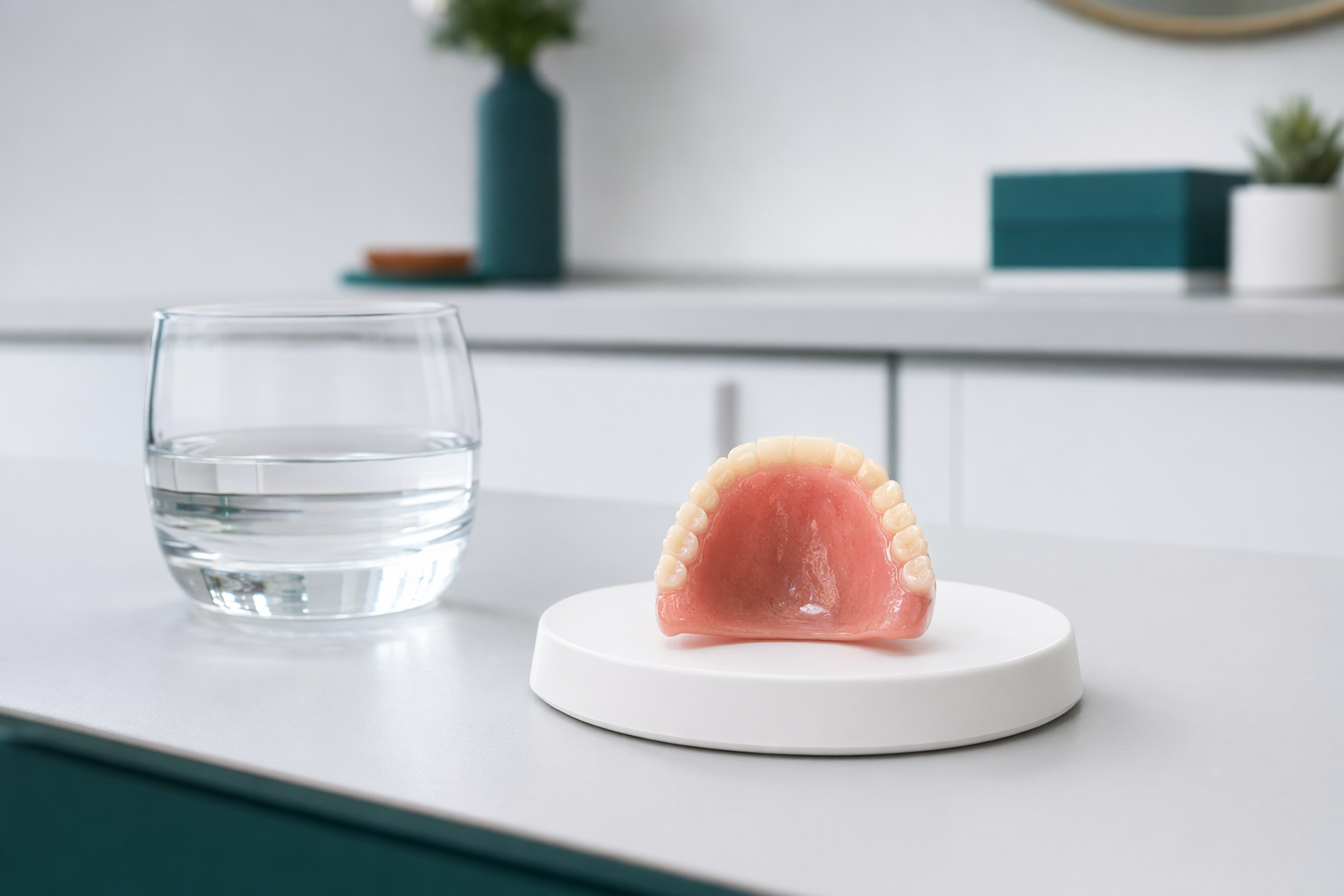
Full dentures, also called complete dentures, are removable prosthetic teeth that replace all the teeth in one arch. An arch means either the full upper teeth or the full lower teeth. Some people need one full denture, and some need both.
A full denture usually has a gum-colored base and a full set of replacement teeth attached to it. The upper denture often covers part of the roof of the mouth for suction and stability. The lower denture sits around the lower ridge and is often harder to keep stable because the tongue and cheeks move around it.
There are two common timing types. Conventional dentures are made after the teeth are removed and the gums have had time to heal. Immediate dentures are placed right after teeth are removed, so the person does not go without teeth during the early healing period. Immediate dentures can be useful, but they often need more adjustments and may fit differently as the gums and bone change.
This is general educational information only, not dental advice. A licensed dentist or prosthodontist needs to examine the mouth and explain what options fit that person's situation.

What they are made of: materials and trade-offs
Most full dentures use an acrylic base with acrylic teeth. This is the standard approach in many offices because it is repairable, relatively common, and usually costs less than more specialized options.
Some dentures may use premium tooth materials, stronger base materials, or reinforced designs in certain cases. In plain terms, the main trade-offs are usually cost, appearance, weight, repairability, and how natural the teeth look. A more customized denture may look more lifelike and fit more precisely, but it usually costs more.
The shape of the denture matters as much as the material. A careful impression, bite record, tooth setup, and adjustment process often affect comfort and function more than marketing words about "premium" materials.
If a dentist recommends a specific material or design, ask what problem it is meant to solve, what the lower-cost option would be, and whether the higher price changes strength, appearance, comfort, or expected maintenance.
How the process usually works
Getting full dentures is usually a step-by-step process, not a single quick visit. The number of visits depends on whether teeth still need to be removed, how much healing is needed, and how customized the denture is.
A common process looks like this:
1. Exam, discussion, and treatment plan.
2. Impressions or digital scans of the gums and mouth.
3. Records of the bite and jaw position.
4. A try-in visit, where the shape and appearance of the teeth may be checked.
5. Delivery of the denture.
6. Follow-up adjustment visits to reduce sore spots and improve fit.
If teeth need to be removed first, the timeline can change. Conventional dentures usually come after healing. Immediate dentures are delivered sooner but often need relining, adjustment, or replacement later because the gums and jawbone change shape during healing.
It is normal for dentures to need an adjustment period. Speech, chewing, and comfort may improve over time, but many people need follow-up visits. That is one reason to ask in advance how adjustments, relines, and later remakes are handled in the written plan.
How long full dentures last
A full denture does not usually last forever in the exact same form. A common rough range for a denture itself is around 5 to 10 years, but that is not a promise. Some need replacement earlier, and some last longer.
The fit can change before the denture is fully worn out because the gums and jawbone can shrink over time, especially after teeth are removed. That is why many people need periodic adjustments, relines, or a remake even if the teeth on the denture still look acceptable.
How long a denture works well depends on the fit, the shape of the mouth, the material, daily wear, cleaning habits, and whether the person has one denture or two. Lower dentures are often more challenging than upper dentures because they tend to move more.
If someone wants more stability, a dentist may discuss implant-supported options as an alternative. That usually costs more, but it can help with retention in some cases. You can read more about costs broadly at costs.
What full dentures usually cost
In the United States, a full denture for one arch often ranges from about $1,000 to $4,000 or more. For both arches, total cost commonly ranges from about $2,000 to $8,000 or more. Higher-end, highly customized dentures can cost more than these ranges in some areas. These are general ranges, not quotes.
The real number depends on several things: the materials used, the number of visits, whether teeth must be removed first, whether immediate dentures are being made, how many adjustments are included, whether future relines are included, the complexity of the mouth, and the local area. Large metro areas and specialty offices may charge more.
If extra services are needed, the total cost rises. Examples can include extractions, bone smoothing in some cases, temporary or immediate dentures, relines, repairs, or a later replacement after healing. Implant-supported dentures cost much more than standard removable full dentures because the implant part is a separate treatment.
Be careful with vague low-price ads. Ask for a written treatment plan and written price before agreeing to treatment. The plan should say what is included, what is not included, and what might cost extra later.
Who full dentures may suit, alternatives, and how to find a provider carefully
Full dentures are one way to replace all teeth in an arch when the natural teeth are already gone or cannot be kept. Compared with implant-supported teeth, standard full dentures usually cost less at the start and do not require implant surgery. The trade-off is that they are removable and may feel less stable, especially on the lower arch.
Another alternative is an implant-supported overdenture or a more fixed full-arch restoration. Those options can improve retention for some people but usually cost much more and involve different planning. A licensed dentist or prosthodontist should explain the pros, limits, costs, and maintenance of each option after an exam.
If you are comparing offices, look for a licensed dentist with experience in removable prosthetics or a prosthodontist. Verify the license in your state. Ask how often they make full dentures, who does the lab work, how many adjustment visits are usually expected, and what happens if the fit is poor after healing.
Watch for pressure tactics:
- vague pricing with no written breakdown
- pressure to start the same day before you understand the plan
- no written treatment plan
- no second opinion offered on a large treatment plan
- cash-only demands without clear paperwork
RestoreBite is a free matching service, not a dental practice, and we do not provide dental care. We can help you connect with licensed restoration dentists near you through get matched or help you compare options across services. We only collect contact details, ZIP code, preferred language, and the type of restoration you are asking about.
Before you commit, use a question list like questions to ask before a restoration. For big plans, getting a second opinion is a sensible step.

Full dentures can replace all teeth in an upper or lower arch for less money than implant options, but fit, comfort, maintenance, and total cost vary a lot, so get a written plan and price from a licensed dentist before you decide.
Common questions
What is the difference between immediate and conventional full dentures?
Immediate dentures are placed right after tooth removal, while conventional dentures are made after the gums have healed more. Immediate dentures can help avoid going without teeth, but they often need more adjustments as the mouth changes.
How much do full dentures cost for top and bottom teeth?
A common general range for both arches together is about $2,000 to $8,000 or more in the US. The real price depends on materials, complexity, extractions, adjustments, location, and what is included, so these ranges are not quotes.
How long does it take to get full dentures?
It depends on whether teeth still need to be removed and whether the denture is immediate or conventional. Some cases move quickly, while others take weeks or months because healing and follow-up adjustments are part of the process.
How long do full dentures usually last?
Many full dentures last around 5 to 10 years, but fit often changes sooner because the gums and bone change over time. Some people need relines, repairs, or replacement earlier.
Are upper and lower dentures equally stable?
Often no. Upper dentures are commonly easier to retain because they can use suction against the upper arch, while lower dentures often move more because of the tongue and the smaller surface area.
Can RestoreBite tell me which denture I need?
No. RestoreBite is a free matching service, not a dental practice, and we do not diagnose or recommend treatment. A licensed dentist or prosthodontist must examine you and provide a written treatment plan.