Guides
Bridge vs partial denture
A bridge and a partial denture can both replace missing teeth, but they work in different ways. This is general, educational information only — not dental advice — and the right choice depends on your mouth, goals, and budget.
The basic difference
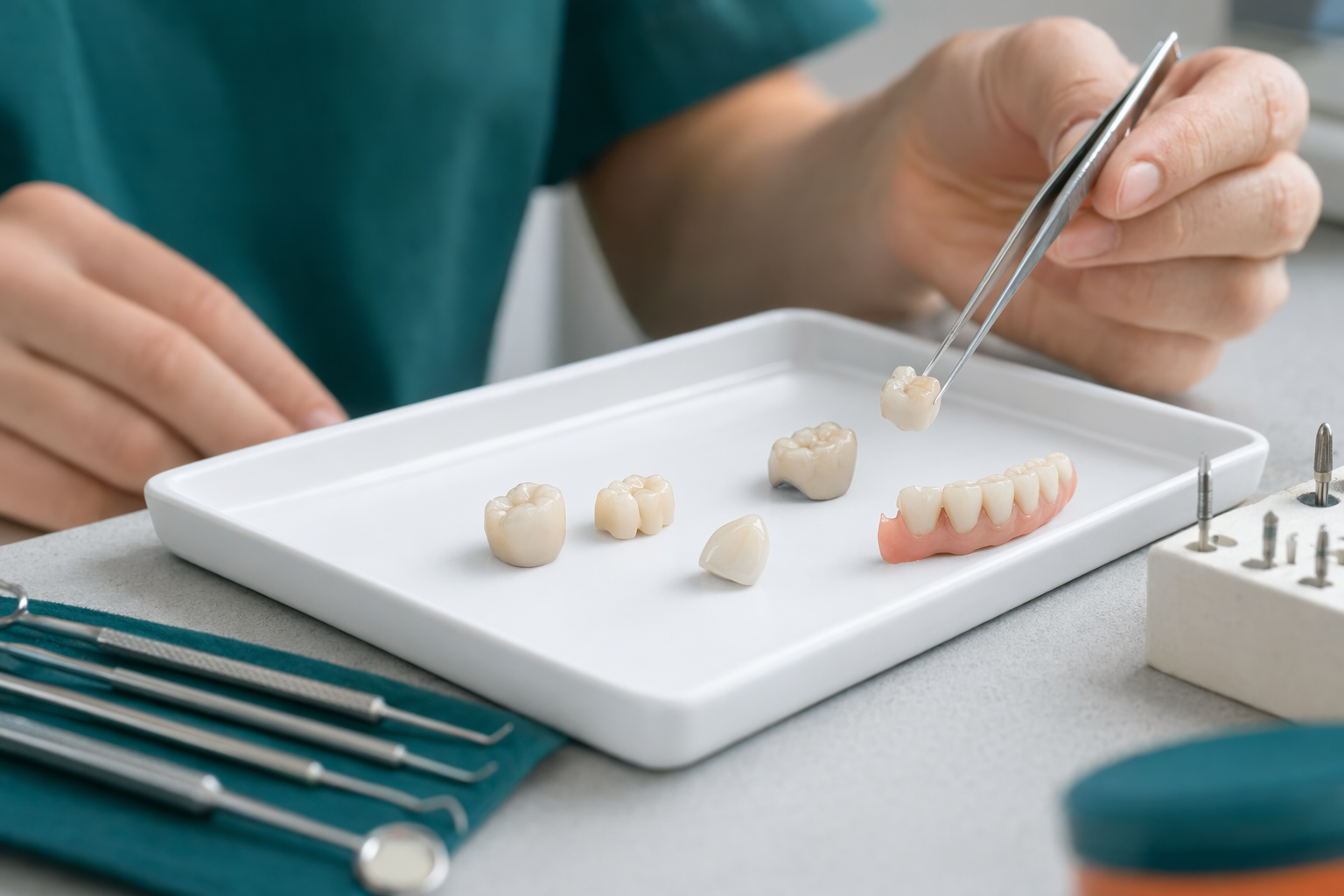
A dental bridge is a fixed restoration. In simple terms, it fills a gap with replacement tooth or teeth that are attached to nearby support teeth, or in some cases attached to implants. You do not take it out yourself.
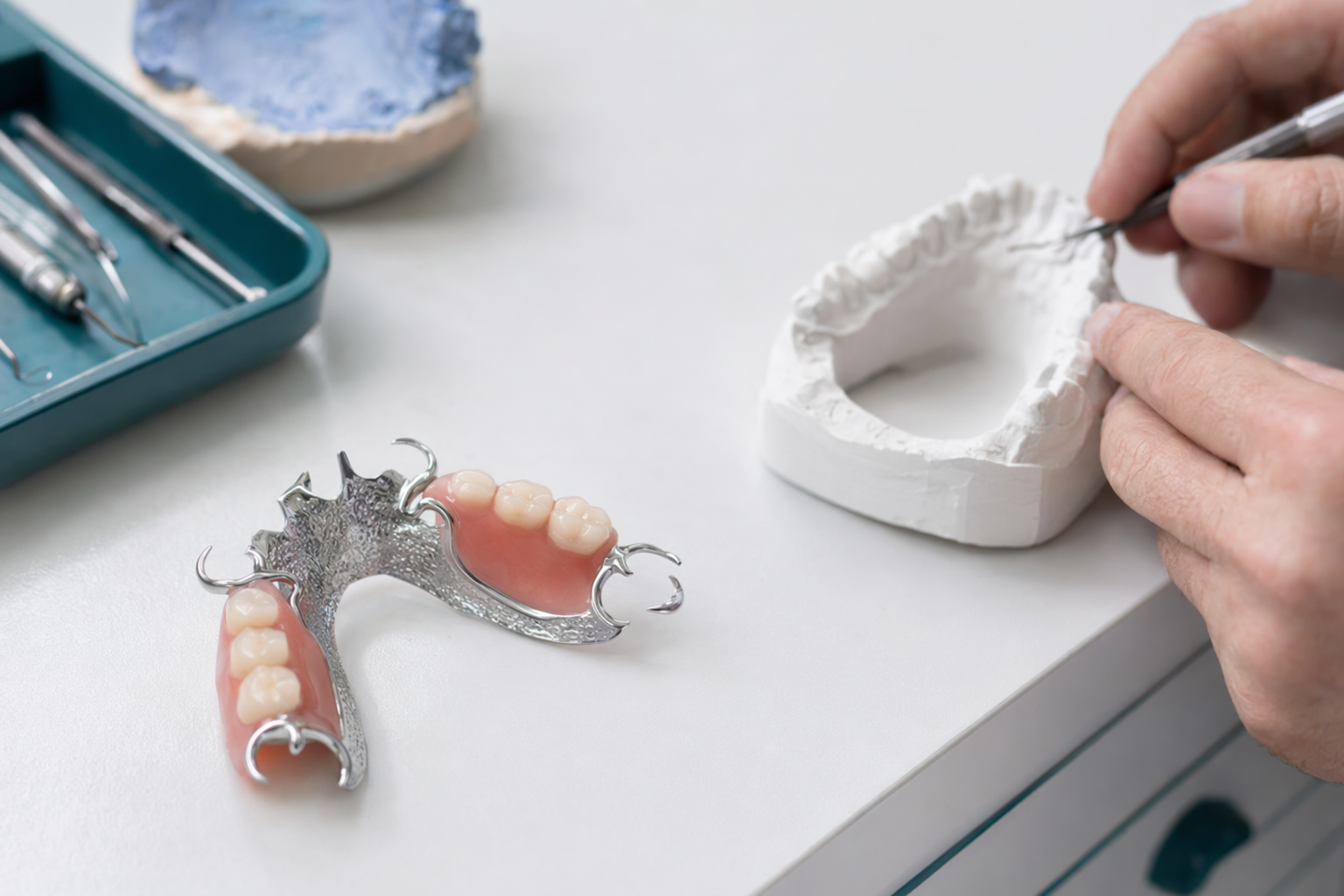
A partial denture is a removable appliance that replaces one or more missing teeth. It usually has replacement teeth attached to a base, and it may use clasps or other connectors to help it stay in place. You take it out for cleaning and usually at night.
Both are common ways to restore missing teeth. Neither is automatically "better" for everyone. A licensed dentist or prosthodontist needs to examine the teeth, gums, bite, bone support, and the size and location of the gap before saying what may fit your situation.
How much they usually cost
Costs vary across the United States. The real number depends on the material used, how many teeth are being replaced, the condition of the nearby teeth, how complex the case is, and the local area. These ranges are general estimates, not quotes.
A traditional bridge often costs about $2,000 to $5,000 or more for one missing tooth supported by crowned neighboring teeth. If more teeth are involved, or if materials and lab work are more complex, the total can go higher.
A partial denture often costs about $700 to $2,500 or more. A basic acrylic partial is usually less expensive than a metal framework partial. More teeth, stronger materials, added adjustments, and more complex design can increase the price.
If you are comparing cost, remember to look beyond the starting number. A lower upfront cost may still involve future relines, repairs, or remakes. A higher upfront cost may involve more tooth preparation or more visits. You can read more general price guides at costs.
Longevity and daily life
A bridge is fixed, so many people like that it feels more like natural teeth in day-to-day life. With good home care and regular dental checkups, some bridges last many years. A rough planning range people often hear is around 5 to 15 years, sometimes longer, but life span depends heavily on the support teeth, bite forces, materials, and cleaning.
A partial denture is removable, and that changes the daily experience. Some people like that it is usually less invasive and can replace multiple teeth in different parts of the mouth. Others find removable appliances less comfortable or less natural-feeling, especially at first. Partials may need adjustments over time as the mouth changes. Some last several years, but fit and comfort can change, and repairs or remakes are not unusual.
Cleaning is different too. A bridge must be cleaned carefully around and under the replacement tooth area. A partial denture must be removed and cleaned separately, and the remaining teeth still need careful brushing and flossing.
Which one feels easier to live with is personal. Some people strongly prefer fixed teeth. Others care most about lower starting cost or replacing several teeth without changing as many natural teeth.
Pros and trade-offs of each option
Bridge:
- Fixed in place; not removed daily
- Often feels more stable than a removable option
- Can look very natural when well planned
- May restore chewing in a way some patients prefer
- Usually costs more upfront than a partial denture
- Often requires changing nearby support teeth if it is a traditional bridge
- If a support tooth has problems later, the whole bridge may be affected
Partial denture:
- Usually lower upfront cost than a bridge
- Can replace several missing teeth, even in different areas
- Removable for cleaning
- Usually involves less permanent change to nearby natural teeth than a traditional bridge
- May feel bulkier or move more during eating or speaking
- Visible clasps may bother some people, depending on design
- Fit can change over time, so adjustments, relines, or remakes may be needed
These are general patterns, not rules. In one mouth, a bridge may be simpler. In another, a partial denture may be the more practical restoration. You can also explore more restoration types at services and other side-by-side comparisons at the guides.
When each may make sense to ask about
A bridge is often something people ask about when there is a smaller gap, the nearby teeth can serve as support, and the person wants a fixed solution. It may also come up when a removable appliance is not appealing to the patient. But whether it is appropriate depends on the condition of the neighboring teeth and gums, the bite, and how much support is really available.
A partial denture is often something people ask about when several teeth are missing, when gaps are in more than one place, or when budget is a major factor. It may also be discussed when a fixed option would require more extensive work than the person wants to consider. But comfort, retention, and long-term fit vary from person to person.
This is not something to decide from a photo or online article alone. Only a licensed dentist who examines you can tell you what options are actually suitable in your mouth.
How to compare safely and avoid pressure
If you are getting estimates, slow the process down. Big dental decisions should come with clear explanations, a written treatment plan, and a written price before you agree to treatment.
- Ask what type of bridge or partial denture is being proposed and why.
- Ask for the full written treatment plan and total price, including likely follow-up visits.
- Ask what may need replacement, adjustment, or repair over time.
- Verify the dentist's state license and, if relevant, prosthodontic credentials.
- Get a second opinion on larger or expensive treatment plans.
Be careful if a clinic gives vague pricing, pushes you to start the same day, will not provide a written plan, discourages a second opinion, or insists on cash only. Those are signs to slow down and look more carefully.
RestoreBite is a free matching service, not a dental practice, and we do not provide dental care. We can help you connect with a licensed restoration dentist or prosthodontist near you. We only collect basic contact details and the type of restoration you are asking about, plus preferred language — not medical or dental history. If you want that help, you can get matched.
If you have a true dental emergency such as severe swelling, high fever, uncontrolled bleeding, or a knocked-out tooth, seek urgent or emergency dental care first.
A bridge is fixed and usually costs more; a partial denture is removable and usually costs less, and a licensed dentist has to examine your mouth to say which options truly fit.
Common questions
Is a bridge better than a partial denture?
Not in every case. A bridge is fixed and a partial denture is removable, but the better fit depends on the number and location of missing teeth, the condition of nearby teeth and gums, comfort goals, and budget.
Why is a bridge usually more expensive?
A bridge often involves more tooth preparation, lab work, materials, and fixed-restoration planning. The actual cost still varies by the number of teeth, material, case difficulty, and local area.
Does a partial denture always feel loose?
Not always, but removable appliances can feel different from fixed teeth, especially at first. Fit, design, the shape of the mouth, and follow-up adjustments all affect how stable it feels.
How long do bridges and partial dentures last?
Both can last for years, but there is no guaranteed timeline. Longevity depends on cleaning, bite forces, materials, changes in the mouth over time, and regular dental care.
Can RestoreBite tell me which one I need?
No. RestoreBite is a free matching service, not a dental practice, and we do not diagnose or recommend treatment. We can help you connect with a licensed dentist or prosthodontist who can examine you and explain your options.
What information do I need to give to get matched?
Only basic contact and request details: your name, phone, optional email, ZIP code, preferred language, and the type of restoration you are asking about. We do not ask for medical or dental history, insurance numbers, financial account numbers, or Social Security numbers.