Guides
Crown vs veneer: which restores your tooth?
Crown and veneer both cover a tooth, but they are made for different jobs. This page gives a plain comparison so you can understand the trade-offs before a licensed dentist examines you.
What each one is
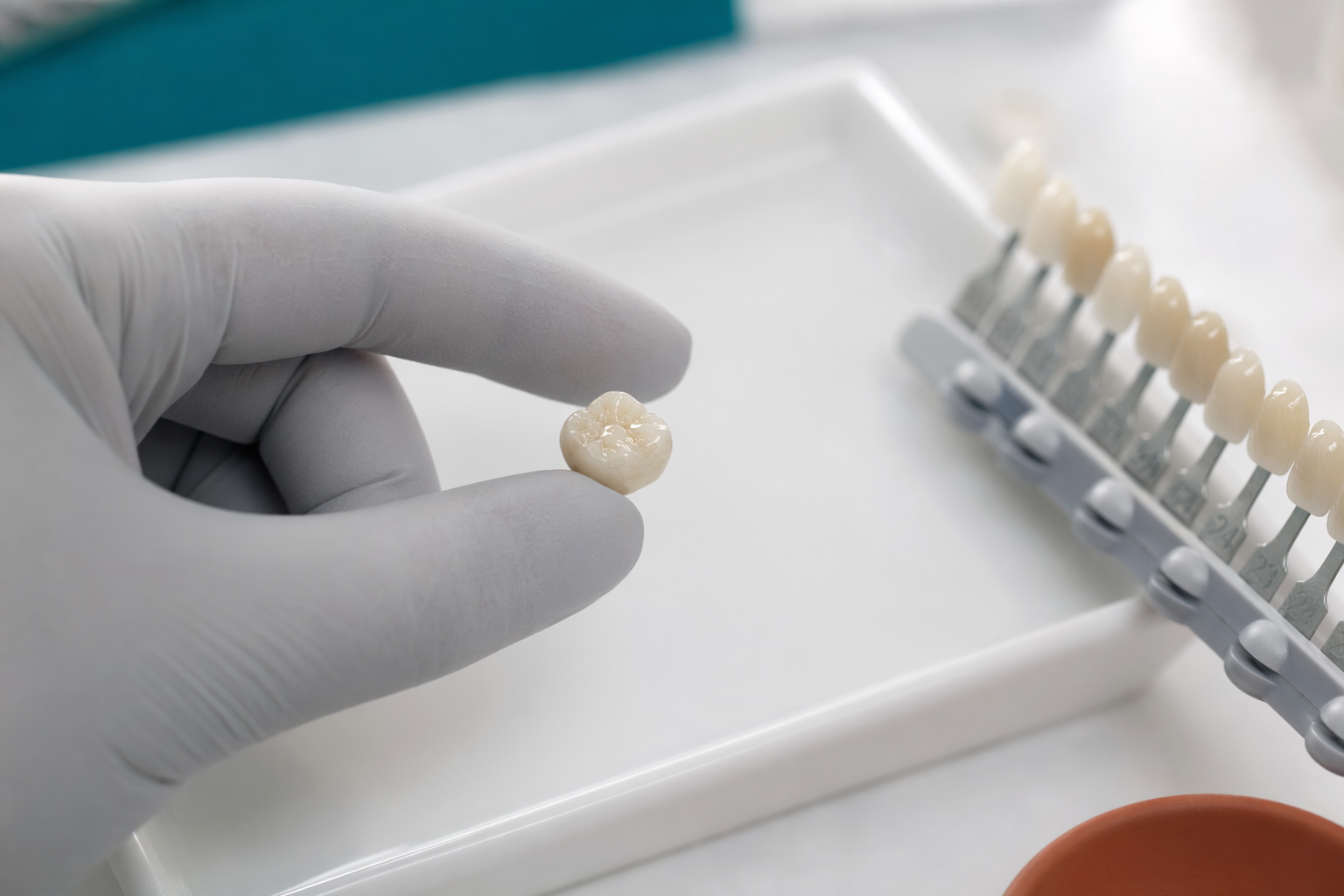
A crown covers the whole visible part of a tooth, like a cap. Dentists use it when a tooth needs more strength or more full coverage after damage, decay, or a large filling.
A veneer covers only the front surface of a tooth. It is usually used to change the look of a front tooth, such as color, shape, or small chips, when the tooth itself still has enough structure.
Both are custom-made. RestoreBite is a free matching service, not a dental practice, and we do not diagnose or decide which one is right for you.
- Crown = full coverage
- Veneer = front-surface coverage
- A dentist must examine the tooth first
Cost: honest ranges, not quotes
Costs vary by material, the number of teeth, where you live, and how much work the tooth needs before the final restoration. These are general U.S. ranges only, not quotes.
A crown often costs about $800 to $2,500+ per tooth. A veneer often costs about $900 to $2,500+ per tooth, and porcelain versions may be on the higher end. If several teeth are involved, total cost can rise quickly.
Prices can go up if there is decay, an old filling to replace, gum work, a temporary restoration, or extra visits. If a price is vague, or you are pushed to start the same day, ask for a written treatment plan and itemized price first. You can compare more general pricing on Costs.
Longevity and upkeep
A crown and a veneer can both last for years, but neither lasts forever. How long they last depends on the material, bite forces, home care, grinding, and regular dental visits.
In general, crowns often last about 5 to 15 years or longer. Veneers often last about 7 to 15 years or longer. These are rough ranges, not guarantees.
Both can chip, loosen, stain at the edges, or need replacement later. Good brushing, flossing, and routine cleanings help, but only a licensed dentist can tell you the realistic outlook for your mouth.
- Crowns may be chosen for strength
- Veneers may be chosen for front-tooth appearance
- Both may need replacement later
Pros and cons in plain words
A crown’s main advantage is coverage and strength. It can protect a tooth that has been weakened. The trade-off is that more of the tooth is usually shaped down to make room for the crown.
A veneer’s main advantage is a more conservative look for the front of a tooth. The trade-off is that it is usually not meant for teeth that need major reinforcement, and it can be less suitable if the bite is heavy or the tooth is badly damaged.
Neither option is automatically better. The right choice depends on what the tooth needs, how much healthy tooth is left, your bite, and your budget. A dentist who examines you decides with you, not from a photo alone.
When each one makes sense
- A crown may make more sense when a tooth is cracked, heavily filled, worn down, or needs full coverage.
- A veneer may make more sense when the main goal is changing the front appearance of a tooth that is still structurally sound.
- If more than one tooth is involved, the plan may be a mix of crowns, veneers, or other restorations.
If you are comparing options, ask for a written plan that says what each tooth needs, why it is being suggested, the material, the full price, and what happens if the tooth changes later. If you want help finding licensed restoration dentists or prosthodontists near you, you can get matched.
How to compare dentists before you decide
Ask for the dentist’s license, a written treatment plan, and the price before any work starts. For a big or expensive plan, it is wise to get a second opinion.
Be careful with vague pricing, same-day pressure, no written plan, no second opinion, or cash-only demands. Those can be warning signs of poor transparency.
RestoreBite only collects contact details and the type of restoration you want, plus preferred language. We do not collect medical history or insurance numbers, and we are free for patients. To see the broader service list, visit restorations or browse the comparison hub at the guides.
A crown covers the whole tooth for strength, while a veneer covers the front for appearance; the right choice depends on the tooth, your bite, and a dentist’s exam.
Common questions
Is a crown the same as a veneer?
No. A crown covers the whole tooth, while a veneer covers only the front surface. They are used for different situations and different goals.
Which lasts longer, a crown or a veneer?
Both can last for years, and both can fail or need replacement. Crowns are often chosen for strength, while veneers are often chosen for front-tooth appearance; the actual lifespan depends on the tooth and the material.
Can I ask for a crown or a veneer by name?
You can ask about both, but a licensed dentist should examine the tooth first. The best choice depends on the tooth’s condition, the bite, and the amount of healthy tooth left.
How do I avoid overpaying?
Get a written treatment plan and itemized price, verify the dentist’s license, and get a second opinion for a large plan. Be cautious if someone pressures you to start right away without clear prices.