Guides
Crown vs bridge vs implant: how to choose
Crown, bridge, and implant-supported teeth are different ways to restore missing or damaged teeth. This guide explains the usual differences, typical trade-offs, and how to compare options with a licensed restoration dentist.
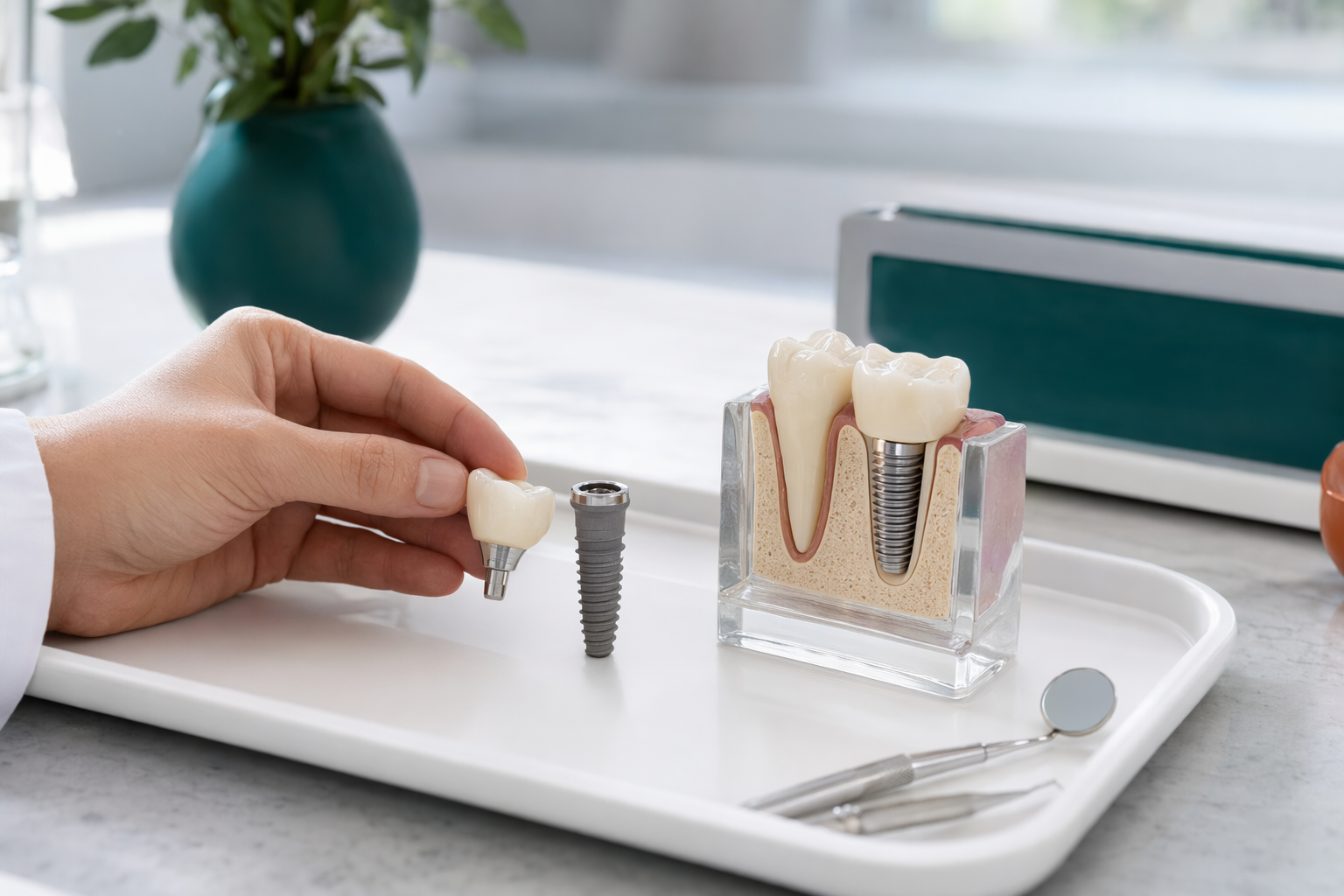
First: what each option generally is
A crown is a “cap” placed over a tooth to restore its shape and strength.
A bridge replaces one or more missing teeth using teeth (often natural teeth) on the sides as supports.
An implant-supported restoration uses a titanium post placed in the jawbone, with a visible tooth (crown) attached to it.
Which one is “best” depends on exam findings (not just the look in a mirror). Ask for a clear written plan and price so you can compare options fairly.
- - General rule of thumb: crowns restore what’s there; bridges and implants help replace what’s missing.

How to choose: the practical questions to ask
When you meet a licensed dentist or prosthodontist, focus on questions that affect cost, time, and long-term maintenance—without rushing.
Use these questions to understand the trade-offs:
- “What teeth are being restored or replaced, and why do you recommend this option vs the others?”
- “What parts are involved (for example: crown only, bridge with supports, or implant post plus crown)?”
- “What materials are you proposing, and how do they affect looks and durability?”
- “How many visits are typical, and what happens if something needs adjustment?”
- “What is the total cost for the full plan, and what’s included (exam, imaging, lab work, temporary restorations)?”
- “Do you provide a written treatment plan and written price before starting?”
- “If I want a second opinion, where can I go?”
If anyone pressures you to start the same day, refuses to give a written plan/price, or can’t explain the difference between options clearly, that’s a red flag.
- - If the recommendation is a big change, ask for a second opinion—especially for multi-tooth work or implants.
Trade-offs: crown vs bridge vs implant (what usually changes)
Here are common trade-offs to discuss. These are general educational points—your exam will determine what’s realistic.
Crowns often fit when there is a remaining tooth that can support a cap. Trade-offs can include how much of the tooth can be preserved and what the crown is made from.
Bridges can be an option when teeth next to the missing tooth (or teeth) are usable. Trade-offs often include whether nearby teeth need to be prepared as supports and how the bridge affects cleaning around it.
Implants are often considered when replacing a tooth where a post can be supported by the jaw. Trade-offs often include a longer process (planning and healing time), surgical steps, and the need for long-term maintenance.
If you’re comparing, ask your provider to explain how each option would affect nearby teeth, cleaning, comfort, and follow-up care—plainly.
- - Red flag: vague explanations, “trust me” pricing, or no discussion of alternatives.
Cost ranges to expect in the US (and what moves the number)
Costs vary a lot by location, materials, the number of teeth involved, and what your mouth needs. The ranges below are not quotes—they’re a helpful starting point for comparison.
- Crown: often roughly $1,000–$3,000+ per tooth.
- Bridge (per missing tooth, not always charged exactly per tooth): often roughly $2,000–$5,000+ total depending on span and materials.
- Implant-supported restoration: often roughly $3,000–$6,000+ per implant plus the visible tooth/crown, so total can be $4,000–$8,000+ depending on the full plan.
What can increase cost:
1. More teeth involved (bigger spans or full-mouth work).
2. Higher-cost materials or custom lab work.
3. Special planning or imaging.
4. Additional procedures that may be needed as part of the restoration plan (decided by a licensed clinician).
What can lower cost:
1. Using a simpler design when it’s appropriate.
2. Choosing less expensive material options.
3. Treating fewer teeth.
For a match and comparison, you can explore cost basics and then use RestoreBite’s free matching to connect with a licensed restoration dentist near you at get matched.
- - Ask: “What is the total cost on paper before we start?” and “Is there a written breakdown?”
Steps to get answers fast (without getting pressured)
If you want to move from confusion to clarity, use a simple checklist when comparing offices.
- Write down what you’re missing or restoring (for example: “one missing tooth,” “cracked tooth,” or “multiple teeth”).
- Ask for a written treatment plan that states what will be done, materials, number of teeth, timeline, and follow-up.
- Ask for a written price for the full plan, including any lab work and temporaries.
- Verify credentials: confirm the dentist/prosthodontist is licensed in your state and is qualified in restorative/prosthodontic work.
- Ask about alternatives (crown vs bridge vs implant) when applicable to your case.
- Get a second opinion for major or multi-step plans if you feel uncertain.
- Choose on fit and clarity, not speed or pressure.
RestoreBite is a free matching service, not a dental office. We help people find licensed restoration dentists/prosthodontists near them based on restoration type and preferred language.
- - If you’re unsure where to start, browse [restoration guides](/guides/) and then request a match at /get-matched/.
Compare crown vs bridge vs implant by asking for a written plan and price, verifying licensing, and choosing the option that fits your teeth and your timeline.
Common questions
Can the same tooth be treated with a crown, bridge, or implant?
Sometimes, different approaches may be possible, but it depends on whether the tooth is still present, its condition, and what supports are available. A licensed dentist can explain which options are realistic for your situation and why, using a written plan and price.
How many visits are typical?
Timelines vary by the design (crown vs bridge vs implant) and the number of teeth involved. In general, implant-supported work can take longer due to planning and healing steps. Ask the office for an estimated schedule in writing.
Are crowns always cheaper than implants?
Crowns are often less expensive than implant-supported options, but the total cost can change based on materials, how many teeth are involved, and what additional steps are needed. Always compare the full written plan rather than a single line item.
What should I do if I’m worried about being overcharged?
Be cautious if pricing is vague, there’s pressure to start immediately, there’s no written treatment plan, or it’s cash-only with unclear itemization. Ask for a written breakdown, verify the license, and consider a second opinion.
Does RestoreBite provide treatment or medical advice?
No. RestoreBite is a free matching service. We provide educational information and connect you with licensed restoration dentists/prosthodontists near you for an exam and a written plan.