Guides
Dental restoration materials, explained
Dental restoration materials affect look, strength, fit, and cost. This guide explains the common options for crowns, bridges, dentures, and implant-supported teeth—so you can ask better questions and plan confidently.
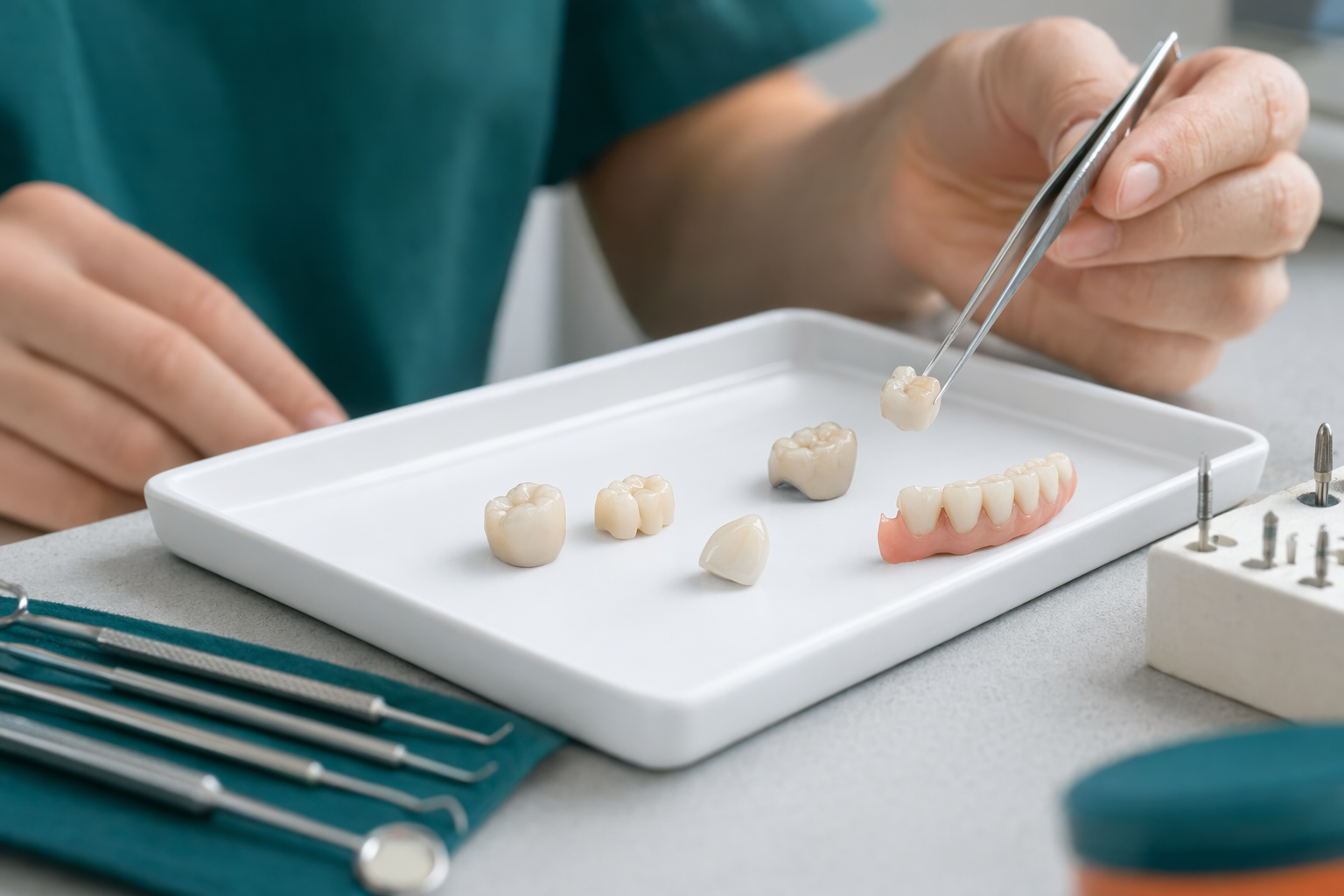
First: what “material” choices usually change
In most restoration cases, the material choice affects:
- How natural the tooth looks
- How strong it is and how well it resists chipping or wear
- How the dentist builds and supports the restoration
- How long it may last (varies by person and bite)
- The overall cost range
Different materials also require different preparation steps and different maintenance. Your licensed restoration dentist can explain what fits your situation after an exam.
This page is general education only, not dental advice or a diagnosis. If you have a dental emergency (for example, a knocked-out tooth, severe swelling, high fever, or uncontrolled bleeding), seek urgent/emergency care first.

Crowns and onlays: common material options
Crowns cover a tooth to restore strength and shape. Common materials include:
- Porcelain/ceramic (often used when a natural look is important)
- Zirconia (a very strong ceramic option)
- Metal-based crowns (can be durable; appearance varies)
- Resin-based or hybrid options (sometimes used depending on the case)
Trade-offs to understand:
- Look: Porcelain/ceramic options are often chosen for tooth-color matching.
- Strength: Zirconia is generally selected for strength; metal can also be durable.
- Wear and opposing teeth: Some materials may feel different in the bite. Your dentist can explain what to expect.
Cost usually changes based on the material, how complex the tooth build-up is, and where you live. For example, crown costs in the US are often roughly in the range of a few hundred dollars to several thousand dollars per tooth—materials and case complexity can move the number up or down.
Bridges: materials and support matter
Bridges replace missing teeth using “support” from nearby teeth (or implants, in implant-supported bridges). The materials of the visible part (the teeth you see) and the internal framework (the structure underneath) both matter.
Common choices include:
- All-ceramic bridges (often selected for appearance)
- Zirconia-based frameworks (for strength and support)
- Metal or metal-ceramic combinations (often chosen for durability)
Trade-offs:
1. Span length: More missing teeth can require more structure and cost.
2. Support type: Bridges supported by adjacent teeth can involve different preparation than implant-supported options.
3. Gum and bite details: Fit and occlusion (how the teeth meet) affect comfort and long-term results.
Bridge costs also vary widely by region and complexity. Many people see broad ranges—often from a few thousand dollars up to several thousand per side depending on the plan. This is not a quote; get a written itemized price after the exam.
Dentures (partial and full): material basics
Dentures replace missing teeth and can be partial (replacing some teeth) or full (replacing all teeth in an arch). The “tooth teeth” and the base can be made from different materials, and the way they fit is a major factor.
Common denture components:
- Acrylic resin base (commonly used for the foundation)
- Acrylic or denture teeth made to match natural shape and color
- Metal partial frameworks (in many partial dentures) for additional support
Trade-offs to understand:
- Stability: Fit and retention (how well they stay) can be a bigger factor than the base material alone.
- Comfort and adaptation: New dentures may take time to adjust.
- Maintenance: Relines, adjustments, and periodic replacement can be part of long-term care.
Cost ranges vary strongly. Partial and full denture prices can often fall from a few hundred to a few thousand dollars depending on the design, materials, number of teeth replaced, and whether implants are involved. Ask for a written plan that lists what is included.
Implant-supported teeth: materials plus the “system”
Implant-supported restorations use implants as support (instead of relying only on natural teeth). Even when implants are the same general concept, the restoration materials can differ—especially the top “crown/teeth” portion and the connection parts.
Common material areas:
- The visible crown/bridge portion (often ceramic or zirconia, or metal-ceramic systems)
- The framework/structure (depending on design)
- Connection parts between implant and restoration (system-specific)
Trade-offs:
- Material for the visible part: Impacts color and how natural it looks.
- Framework design: Affects strength and long-term fit.
- Planning complexity: The full plan may include exam records and a staged timeline.
Because implant-supported care is complex, costs can vary from thousands to higher totals depending on how many teeth are replaced, the plan design, and the restoration materials. Your licensed prosthodontist or restoration dentist should explain the material choices and provide written pricing.
How to compare materials without getting pressured
When you talk with a licensed restoration dentist, ask clear questions about materials and trade-offs. A good plan should be written and itemized.
Use this checklist:
- Ask what material is being proposed for the visible part and the internal support (framework).
- Ask how the material is expected to look over time (especially for front teeth).
- Ask about strength and what could cause chipping, wear, or adjustment needs.
- Ask how fit is checked (for example, how impressions/digital scans are used) and what happens if adjustments are needed.
- Ask for a written treatment plan and a written price before you pay.
Red flags to watch for:
- Vague pricing or “you’ll know later” cost statements
- Pressure to start the same day without a written plan
- No written breakdown of what you’re paying for
- Cash-only arrangements without transparent itemized estimates
- Refusal to answer questions about materials or to discuss alternatives
If you’d like help finding a licensed restoration dentist or prosthodontist near you, RestoreBite can match you for free based on your contact info, your ZIP code, and the type of restoration you’re considering. Start at Get matched and review how restoration costs work so you know what drives the range.
Dental restoration materials change appearance, strength, fit, and cost—so compare options with a licensed dentist using a written plan and written price.
Common questions
Which dental restoration material looks most natural?
In general, tooth-colored ceramics (such as porcelain/ceramic or zirconia-based ceramics) are often used when appearance is a top priority. The “most natural” option depends on the tooth location, shade matching, and how the restoration is designed. Ask your licensed dentist to explain the proposed material and what to expect long-term.
Are ceramic or zirconia crowns always better than metal?
Not always. Ceramic and zirconia can be very strong and more tooth-like in appearance, while metal-based options can be durable and may fit certain bite situations. The best choice depends on your specific restoration plan, tooth position, and how the dentist will build and support it.
Why do prices vary so much between dentists and cities?
Restoration costs depend on the material, number of teeth, complexity of the case, and the local market. Prices also vary based on whether the plan includes extra items such as exams, imaging, temporary restorations, and adjustments. Ranges are common, but a written itemized plan is the best way to understand the real cost for your case.
What should I ask for in writing before I agree to treatment?
Ask for a written treatment plan and a written price that clearly lists what’s included. If the plan is major, consider a second opinion from another licensed restoration dentist or prosthodontist. This helps you compare materials and understand trade-offs without pressure.
Does RestoreBite provide the dental work?
No. RestoreBite is a free matching service that connects you with licensed restoration dentists and prosthodontists near you. We do not provide dental care or make treatment recommendations.