Guides
Dentures vs implants: an honest comparison
Dentures and implants can both replace missing teeth, but they work in very different ways. This guide explains the basic trade-offs in plain English so you can compare options before you speak with a licensed dentist.
The short answer
Dentures are removable teeth. Implants are placed in the jaw and act like anchors for replacement teeth. Neither is “best” for everyone — the right choice depends on how many teeth are missing, your mouth, your budget, and what a licensed dentist finds after an exam.
If you want the lowest upfront cost and a faster start, dentures are often the less expensive route. If you want a more fixed-feeling option and are willing to pay more, implants usually cost more at the beginning but can feel more stable for many people.
RestoreBite is a free matching service, not a dental practice. We do not diagnose or recommend a specific treatment; we help people get connected with licensed restoration dentists and prosthodontists who can evaluate them in person.

How dentures and implants differ
Dentures sit on top of the gums and can be taken out for cleaning. Full dentures replace all teeth in an arch; partial dentures replace some missing teeth and use the remaining teeth for support.
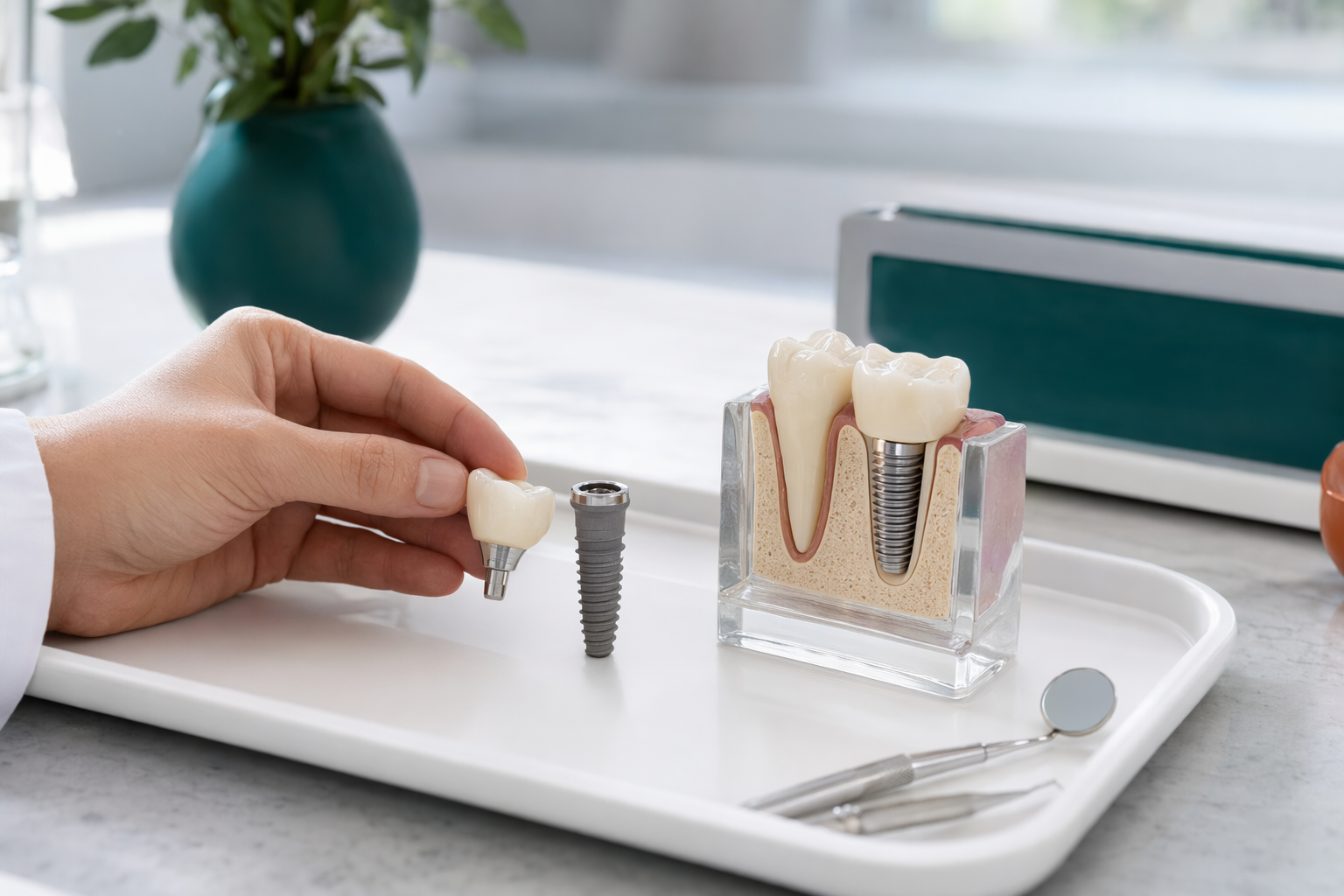
Implants are small posts placed into the jawbone. They can support one tooth, several teeth, or a full arch. Because they are attached to the bone, they are meant to feel more secure than removable teeth.
The main trade-off is simple: dentures are usually easier to start and lower in cost, while implants usually involve more time, more visits, and higher cost, but may offer better stability and less slipping for some people.
Cost: what people often pay
Costs vary a lot by city, materials, the number of teeth being replaced, and what the mouth needs before treatment can begin. The numbers below are broad US ranges, not quotes.
Typical denture ranges:
- Full dentures: about $1,000 to $3,000 per arch for basic to mid-range care; higher-end options can cost more.
- Partial dentures: often about $700 to $2,500, depending on design and materials.
Typical implant-related ranges:
- A single implant with the tooth replacement on top can often total about $3,000 to $6,000 or more.
- Full-mouth implant-supported options can run much higher, often in the tens of thousands.
Extra costs can come from tooth removal, bone grafting, scans, temporary teeth, follow-up visits, and repairs. Ask for a written treatment plan with itemized pricing before you agree to anything.
Pros and trade-offs
Dentures can be a practical choice when cost matters most, when many teeth are missing, or when someone wants a non-surgical option. The trade-offs are that they can move, need adhesive sometimes, and may need relining or replacement over time.
Implants can feel more secure and may help support chewing better for some people. The trade-offs are higher cost, longer treatment time, surgery, and the fact that not every mouth is ready for implants without added work first.
A careful dentist should explain both the benefits and the limits. If you feel rushed, ask for the plan in writing and time to think about it.
Red flags to watch for
Be cautious if a clinic:
- Gives vague pricing but will not put the plan in writing
- Pushes same-day treatment without time for questions
- Does not offer a second opinion on a large or expensive plan
- Says you must pay cash only and will not explain why
- Will not show you the dentist’s license or credentials
A good next step is to verify the provider’s license and ask for a written treatment plan and price breakdown before you decide. For a bigger case, getting a second opinion is often wise.
What to do next
If you are comparing dentures and implants, start with an exam from a licensed dentist or prosthodontist. Bring your questions, ask about the pros and cons of each option for your mouth, and ask what the total cost could include.
You can also use our guides to learn the basics, review restoration services, compare cost ranges, or get matched with a provider near you. RestoreBite asks only for contact details and the type of restoration you are asking about, so a provider can reach out.
- Ask for a written plan and itemized price.
- Verify the dentist’s license before you pay a deposit.
- Get a second opinion for large treatment plans.
Dentures usually cost less up front, implants usually feel more fixed but cost more, and only a licensed dentist can tell you what fits your mouth and budget.
Common questions
Are dentures cheaper than implants?
Usually yes, at least at the start. Dentures often have a lower upfront cost, while implants usually cost more because they involve surgery, parts, and more visits. The exact total depends on how many teeth are being replaced and what the mouth needs first.
Do implants last longer than dentures?
Implants are designed to stay in the jaw, while dentures are removable and often need replacement or adjustment over time. But longevity depends on many factors, so a dentist should explain what is realistic for your situation.
Can I get a price online before I see a dentist?
You can get a rough range online, but not a real quote. The final cost depends on an in-person exam, scans, materials, and whether extra steps are needed first.
How do I know if a dentist is trustworthy?
Look for a licensed dentist or prosthodontist, a written treatment plan, clear itemized pricing, and enough time for questions. Be careful with pressure tactics, vague answers, and same-day pressure for a big plan.