Quick answers
All-on-4 vs traditional implants
All-on-4 and traditional implants are two ways to replace many or all teeth with implant-supported teeth. This guide explains how they differ, common trade-offs, and what to ask a licensed dentist before you decide.
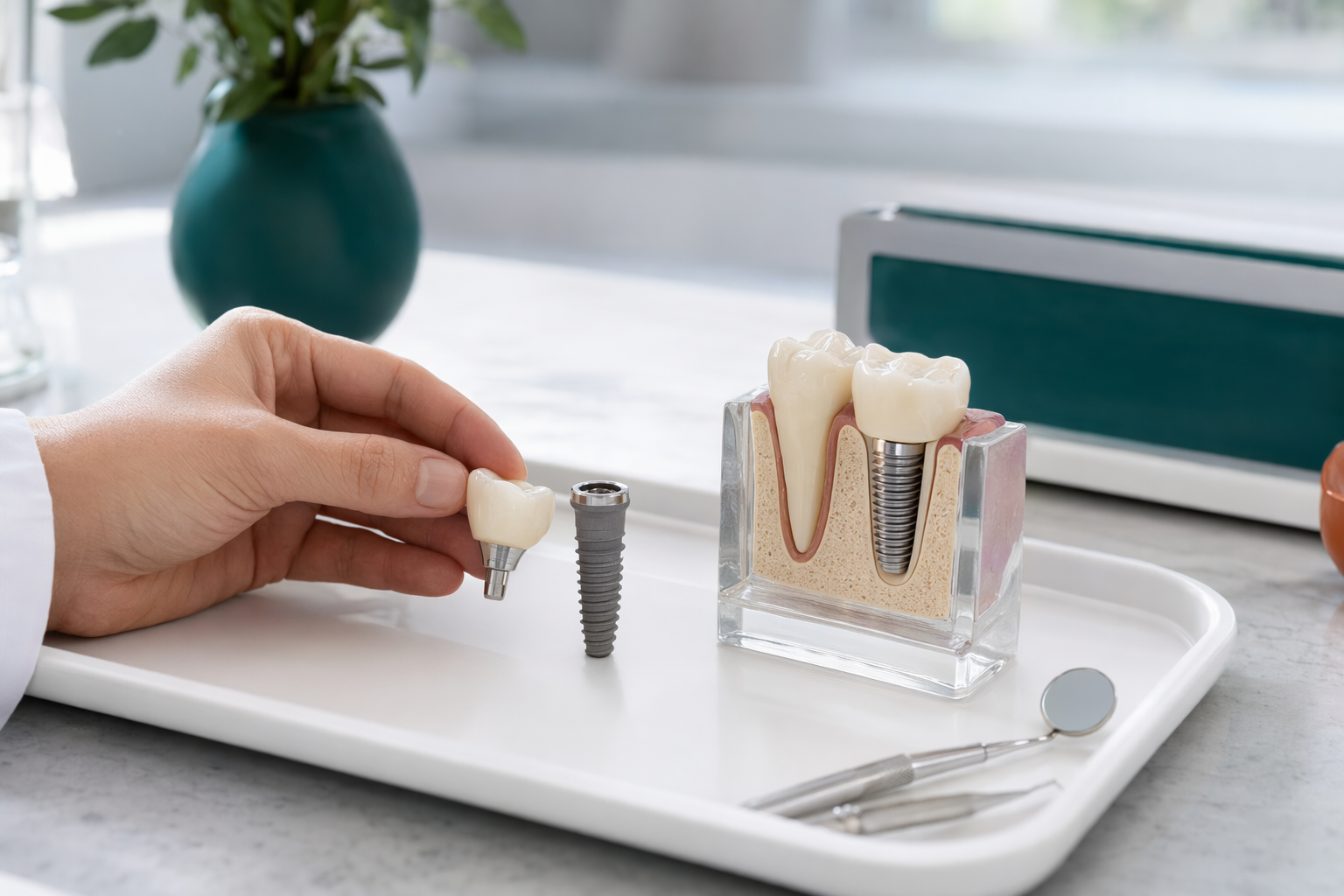
Quick answer: what’s the main difference?
All-on-4 is a specific implant approach that typically uses fewer implants (often 4) to support a full arch of teeth. Traditional implant treatment usually uses more implants and may require more time for placement and healing.
In plain terms: All-on-4 is often discussed when the goal is a full-arch solution with fewer implants, while traditional implants is more flexible but can involve more surgical steps and/or more implants depending on your bone and treatment plan. A dentist must examine your mouth to say what’s realistic for you.
RestoreBite does not provide dental care or make treatment recommendations—we can help you get connected with licensed restoration dentists near you so you can compare options in your language.

How each option is commonly planned (high level)
These are general, educational descriptions. Your exact plan depends on your jaw bone, the teeth you’re replacing, and your overall mouth health—your dentist will review and explain this after an exam.
All-on-4 (high level):
1. A dentist places implants in positions meant to support a full arch.
2. The dentist may use implants angled to help reduce the need for certain bone-building steps in some cases.
3. A prosthesis (the teeth) is then made and secured to the implant structure according to the plan.
Traditional implants (high level):
1. Implants are placed—often more implants are used for a full-arch restoration.
2. Depending on bone and other factors, some people need additional procedures before or during implant placement.
3. Teeth are then attached after healing and the prosthesis is fabricated to fit.
Ask your dentist to explain which parts are “fixed” vs “modifiable” in your plan (implant positions, number of implants, and what the teeth are made of).
Trade-offs to ask about before you choose
Both approaches can be successful for the right person, but there are trade-offs. The right choice depends on your bone quantity/quality, bite, schedule, and comfort with different phases of treatment.
Consider asking these questions (bring a note list):
- How many implants are planned for my case, and why?
- Will I need bone grafting or other preparatory procedures? If yes, what’s the timeline impact?
- What is the expected number of prosthesis adjustments in the first months?
- What maintenance is expected long-term (cleaning methods, checkups)?
- If something doesn’t fit well or needs replacement, what is the process and cost?
Red flags (pressure tactics and unclear plans):
- No written treatment plan or itemized price range
- Vague pricing like “it will be about the same for everyone”
- “Start today” pressure without time to review
- Only one option presented without explaining why alternatives don’t apply to you
- Cash-only or refusal to discuss costs in writing
- You are not given a clear explanation of what happens if complications occur
A fair plan should be specific about materials, number of implants, timeline, and follow-up—written and understandable. If the plan is big, consider a second opinion.
Cost basics (US ranges) and what changes the total
Costs vary widely by location, materials, number of implants, need for bone work, and the prosthesis design. Ranges below are general education, not quotes.
Typical US cost ranges (for a full-arch implant-supported restoration, approximate):
- All-on-4 (full arch): often discussed in the lower to mid five-figure range per arch, but can be higher depending on materials and any preparatory work.
- Traditional implants (full arch): can be similar overall for some cases, or higher if more implants and/or additional procedures are needed.
What commonly raises cost:
1. Bone grafting or preparatory procedures
2. Higher-cost tooth materials or more complex prosthesis designs
3. Additional implants beyond the “minimum” approach
4. Lab fees for the prosthesis and additional visits/adjustments
What can lower cost (in some cases):
- Fewer implants or no bone-building steps needed (if medically appropriate)
- Simpler prosthesis design and fewer adjustments
Before you decide, ask for a written breakdown: implant placement, prosthesis/teeth fabrication, any bone work, anesthesia options if applicable, follow-up visits, and expected adjustment/reline steps.
What to do next (and how RestoreBite helps)
If you’re comparing All-on-4 vs traditional implants, the practical next step is to get an exam and a written plan from licensed providers. You can also ask for a second opinion if the plan is large or the costs feel uncertain.
Here’s a calm checklist for your appointment(s):
1. Ask which option they recommend for your situation and why (in plain language).
2. Request a written treatment plan and written price range for each option you’re considering.
3. Verify the provider is licensed in your state.
4. Ask what materials will be used for the teeth and structure.
5. Ask what maintenance and follow-up are expected.
6. Ask how complications or fit issues are handled, including whether additional charges could apply.
RestoreBite is a FREE matching service that helps you connect with licensed restoration dentists/prosthodontists near you. If you want, you can get matched by sharing your ZIP code and that you’re comparing implant-supported full-arch options, and your preferred language. We do not provide dental care or collect medical history.
If you’re unsure where to start, visit help or learn more about our services and costs.
All-on-4 uses a specific fewer-implant approach for full-arch teeth, while traditional implants often uses more implants and may involve more steps—your exam and a written plan decide what’s realistic and what it costs.
Common questions
Is All-on-4 always cheaper than traditional implants?
Not always. While All-on-4 may use fewer implants, your total cost depends on materials, your jaw bone, whether you need bone work, and your prosthesis plan. Always ask for a written treatment plan and price range for each option.
Do I need bone grafting for All-on-4 or traditional implants?
Some people need preparatory bone work and some do not—the decision is based on exam findings. Ask the dentist to clearly explain whether bone grafting is expected in your case and how it changes the timeline and cost.
What should I ask about the teeth materials and long-term maintenance?
Ask what the teeth are made of, what the supporting structure is like, and what maintenance is expected (cleaning, checkups, and any planned adjustments). Understanding long-term care helps you compare options realistically.
How do I spot an overcharging or pressure tactic?
Be cautious if pricing is vague, there’s strong same-day pressure to start, there’s no written treatment plan, you’re not offered a clear second opinion, or it’s cash-only with limited explanation. Request an itemized written plan and verify the provider’s license.
Is RestoreBite a dental clinic that will treat me?
No. RestoreBite is a FREE matching service. We help you connect with licensed restoration dentists and prosthodontists near you, but we don’t provide dental care or give treatment advice.