Quick answers
Am I a candidate for dental implants?
Maybe — many adults can qualify for dental implants, but the real answer depends on your mouth, jawbone, gums, health history, and goals. Only a licensed dentist or prosthodontist who examines you can tell you for sure.
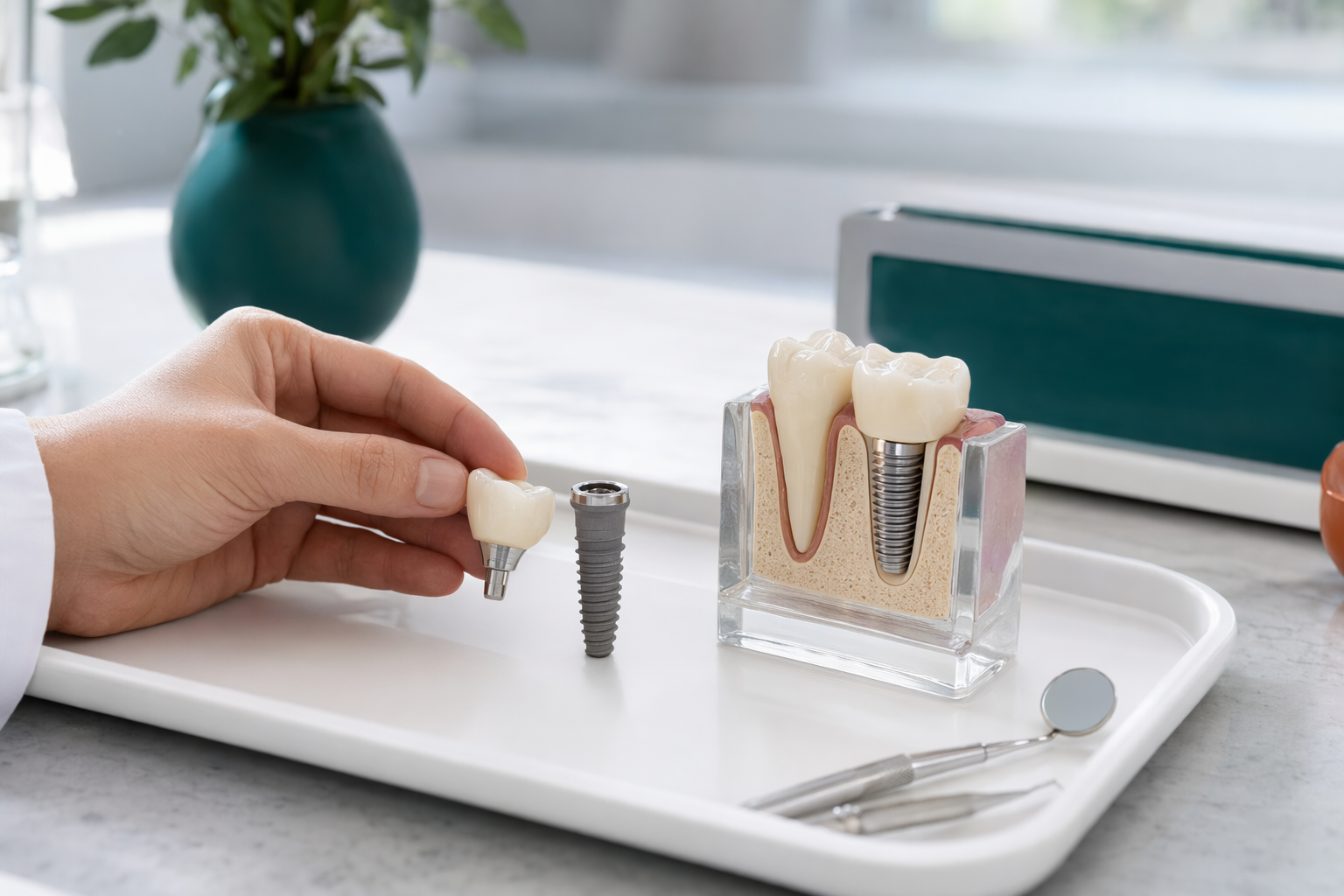
Short answer: maybe, but you need an exam
Dental implants can work for many people who are missing one tooth, several teeth, or all teeth. They are small posts placed in the jaw to support a crown, bridge, or denture. For some people, they feel more stable and natural than removable dentures.
But not everyone is a good implant candidate right away. Some people may need other dental work first, more healing time, or a different kind of restoration. This page is general information only — not dental advice. A licensed dentist or prosthodontist has to examine you, review images, and explain your options.
RestoreBite is a free matching service, not a dental practice. We do not provide dental care. If you want help finding a restoration dentist near you, you can use our free matching service or read more about restoration options.

What dentists usually look at
A dentist will usually look at the area where the tooth is missing, the condition of your gums, your bite, and how much jawbone is available to support an implant. They may also look at whether nearby teeth are healthy and whether you grind or clench your teeth.
General health can matter too. Healing may be harder for some people depending on smoking, uncontrolled diabetes, certain medicines, past radiation treatment to the jaw area, or other health issues. That does not automatically mean implants are impossible. It means the dentist needs to evaluate the full picture carefully.
They also look at your goals. Some people want one fixed tooth. Others want a more stable denture. Others may be comparing implants with a bridge or partial denture and deciding what fits their budget, timeline, and comfort level.
- Enough jawbone helps support an implant
- Healthy gums matter because implants need healthy surrounding tissue
- Bite force and teeth grinding can affect planning
- Smoking and some health conditions can lower success or slow healing
Signs you may be a possible candidate — and reasons treatment may be delayed
You may be a possible implant candidate if you are missing teeth, your gums are reasonably healthy, and there is enough bone to hold an implant or a path to build up bone. Some people get implants months after an extraction. Others need to heal first or need added procedures before implants are considered.
A dentist may delay or avoid implants if there is active gum disease, untreated decay in other teeth, severe bone loss, uncontrolled medical issues, heavy smoking, or habits like strong grinding. In some cases, the issue can be treated first. In other cases, another restoration may make more sense.
This is where careful planning matters. A good office should explain why they think implants may or may not fit your case, what other options exist, and what the trade-offs are.
- Possible candidate does not mean guaranteed candidate
- Needing bone grafting or gum treatment is common in some cases
- Some people are better served by a bridge or denture instead
Costs, timing, and trade-offs
Implants are often one of the more expensive tooth-replacement options, but they are not all the same. A single implant with the post, connector, and crown often falls around $3,000 to $6,500 per tooth in the United States. Implant-supported bridges, snap-in dentures, and full-arch implant teeth can cost much more. In some cases, full-arch treatment can range from about $15,000 to $40,000 or more per arch. These are broad ranges, not quotes.
The real number depends on the materials used, how many teeth are being replaced, whether extractions or bone grafting are needed, the condition of the mouth, and the area where you live. Imaging, sedation, temporary teeth, and specialist fees can also change the total. You can read more on our costs guide.
Time is another trade-off. Some implant cases take months because healing is part of the process. Bridges and dentures may be faster or cost less upfront. Implants may feel more secure for some people, but they also involve surgery and careful maintenance.
Red flags when you ask about implants
Be careful if a clinic pushes you to start the same day without clearly explaining the full plan, risks, alternatives, and total cost. Big restoration work should come with a written treatment plan and written pricing before you agree to move forward.
Other red flags include vague pricing, refusal to discuss other options, no second opinion offered on a large case, cash-only demands, or pressure that makes you feel rushed. It is reasonable to ask who will do each part of the work and whether the dentist or specialist is licensed in your state.
Before you choose a provider, ask for these basic steps:
1. Get a written treatment plan.
2. Get a written price estimate with what is and is not included.
3. Verify the dentist's state license.
4. Ask what alternatives were considered.
5. Get a second opinion for major or expensive treatment.
If you need help understanding terms or finding a provider who works in your language, see our help page or use our free get matched page.
What RestoreBite can and cannot do
RestoreBite can help you connect with a licensed restoration dentist or prosthodontist near you. The service is free for patients. We are not a dental office, and we do not diagnose, examine, or recommend a specific treatment.
We only collect basic contact details and what kind of restoration you are asking about: name, phone, optional email, ZIP code, preferred language, and restoration type. We do not ask for medical or dental history, medicines, insurance numbers, financial account numbers, or Social Security numbers.
If you have a true dental emergency — such as severe swelling, high fever, uncontrolled bleeding, or a knocked-out tooth — seek urgent or emergency dental care first.
You might be a candidate for dental implants, but only a licensed dentist or prosthodontist who examines you can say for sure — so get a written plan, verify the license, and do not let anyone rush you.
Common questions
Can anyone get dental implants?
No. Many adults may qualify, but not everyone is a candidate right away. A licensed dentist or prosthodontist needs to examine your mouth and images to tell you whether implants are suitable.
Do I need a lot of jawbone for dental implants?
Enough bone is important because the implant needs support. Some people who do not have enough bone may still be evaluated for other approaches or added procedures, but that decision requires an exam.
Can smokers get dental implants?
Some smokers do get implants, but smoking can reduce healing and increase problems. A dentist should explain how smoking may affect success and what other options may exist.
Are dental implants better than a bridge or denture?
Not always. Implants can feel more secure for some people, but they cost more, take longer, and involve surgery. A bridge or denture may be more practical depending on the mouth, budget, and goals.
How do I know if an implant quote is fair?
Ask for a written plan and a written price that shows what is included and what may cost extra. Compare more than one licensed provider when the case is large or expensive.
Can RestoreBite tell me if I am a candidate?
No. RestoreBite is a free matching service, not a dental practice. We can help you connect with a licensed restoration dentist, but only a clinician who examines you can answer that question.