Quick answers
Can a dental bridge be replaced with an implant?
Sometimes yes, a dental bridge can be replaced with one or more implants — but not always, and not in one simple way for every mouth. The right setup depends on the teeth, gums, bone, bite, and the condition of the current bridge.
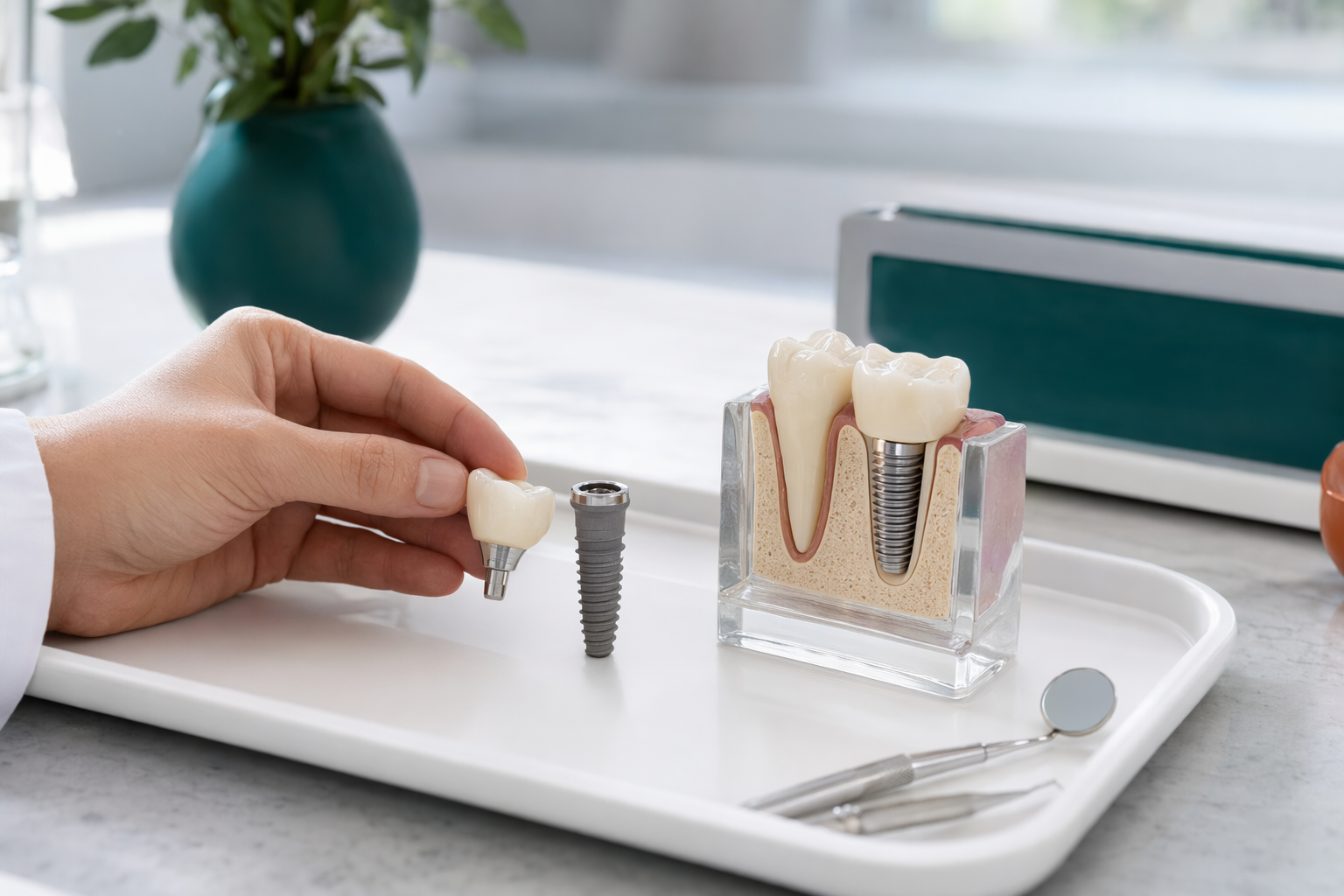
Short answer: yes, but it depends on what is under the bridge
A bridge can sometimes be removed and replaced with an implant-supported restoration. In other cases, the better option may be a new bridge, treatment on the supporting teeth, or a staged plan done over time. A licensed dentist or prosthodontist has to examine the area and take images before saying what is actually possible.
The big question is what the current bridge is attached to, and what condition those teeth and the jawbone are in now. If the bridge used neighboring teeth as supports, those teeth may still be healthy, damaged, decayed, loose, or already heavily worked on. If a tooth under or near the bridge must be removed, an implant may become one option for replacing it.
Implants are placed into the jawbone, so bone matters. If bone has shrunk in the area, some people may need added steps before an implant can be placed. That can affect time, cost, and whether the plan happens in one stage or several.
This is general information only, not dental advice. RestoreBite is a free matching service, not a dental practice, and we do not provide dental care. If you want help finding a licensed restoration dentist near you, you can use get matched.

When replacing a bridge with an implant may make sense
People often ask about switching from a bridge to an implant when the bridge is old, loose, cracked, trapping food, or hard to clean. Another common reason is concern about the teeth holding the bridge. If one of those supporting teeth fails, the whole bridge may need to be redone, changed, or replaced with a different type of restoration.
An implant can sometimes help avoid putting a new restoration on neighboring teeth. That is one reason some patients ask about it. But implants are not automatically better in every case. Surgery, healing time, bone limits, smoking, bite forces, and overall mouth condition can all change the picture.
A careful dentist may review options such as:
1. keeping the bridge if it is still sound
2. replacing the bridge with a new bridge
3. removing a failing support tooth and replacing one tooth with an implant crown
4. using two or more implants to support a larger replacement
For bigger treatment plans, get a written treatment plan and written price before you agree to anything. If the plan is expensive or complicated, getting a second opinion is a smart step, not an insult.
What the trade-offs usually look like
A traditional bridge is often faster than implant treatment because it usually does not involve implant surgery or months of healing. But a bridge depends on support from nearby teeth, and those teeth do extra work. If those support teeth are already strong and heavily restored, a dentist may discuss whether redoing a bridge is reasonable.
An implant does not get decay like a natural tooth, but it is not maintenance-free. It still needs good cleaning and regular follow-up. Implants can also involve extra procedures, more visits, and a longer timeline. Some people like the idea of not relying on neighboring teeth; others prefer the shorter path of a bridge.
Cost is another trade-off. Very general U.S. ranges are often around:
- bridge replacement for one missing tooth: about $2,000 to $5,000+
- single implant with implant, abutment, and crown: about $3,000 to $7,000+
- bone grafting or other added steps: can add hundreds to several thousand dollars
These are not quotes. Real prices depend on the material, the number of teeth, the condition of the mouth, whether extra procedures are needed, and the area of the country. You can read more at costs.
Questions to ask before you decide
If a dentist says your bridge should be replaced, ask them to explain exactly why in plain language. Is the problem the bridge itself, one supporting tooth, decay at the edge, a bite issue, gum problems, or something else? Ask what images they used and what they see.
Useful questions include:
- What are all my restoration options here?
- If I choose an implant, how many stages are involved?
- Will I need a tooth removed first, and will I need bone grafting?
- How long will healing take before the final tooth is placed?
- What are the risks, limits, and likely maintenance needs?
- What is the total written cost, including parts, visits, and possible added procedures?
A careful office should be willing to give you a written treatment plan and a written price range or estimate. If pricing is vague, if someone pressures you to start the same day, or if they will not explain alternatives, slow down.
Red flags and how to protect yourself
Dental restoration can be expensive, and pressure sometimes shows up when people feel rushed or embarrassed. Watch for red flags like vague pricing, no written treatment plan, no second opinion offered for a big case, heavy same-day pressure to sign, or cash-only demands without clear documentation.
Before moving forward:
1. verify the dentist's license in your state
2. ask whether the person planning complex restoration work is a general dentist or a prosthodontist
3. get the treatment plan and price in writing
4. ask what happens if extra work is needed after the bridge is removed
5. get a second opinion on larger treatment plans
If you are in severe pain, have major swelling, high fever, uncontrolled bleeding, or a knocked-out tooth, seek urgent or emergency dental care first. RestoreBite cannot provide treatment or emergency care.
If you want help understanding the types of restoration before you book visits, see services or help.
A bridge can sometimes be replaced with an implant, but only an exam can show whether it fits your teeth, bone, time, and budget.
Common questions
Can any bridge be replaced with an implant?
No. Sometimes yes, but it depends on the supporting teeth, the jawbone, the gums, the bite, and the overall condition of the area. A licensed dentist has to examine you and take images to say what is possible.
Do they have to remove the whole bridge first?
Often the dentist needs to evaluate the full bridge and the teeth under it, and that may involve removing it at some point. Whether that happens right away or later depends on the case and the treatment plan.
Is an implant better than a bridge?
Not always. An implant may avoid relying on neighboring teeth, but it can take longer, cost more, and sometimes needs extra procedures. A bridge may be faster, but it depends on support from nearby teeth.
How much does it cost to replace a bridge with an implant?
A single implant restoration is often around $3,000 to $7,000+ in the U.S., while a bridge replacement for one missing tooth may be around $2,000 to $5,000+. These are broad ranges, not quotes, and the real number depends on materials, extra procedures, your mouth, and your area.
Does insurance cover switching from a bridge to an implant?
Sometimes partly, sometimes not. Coverage varies a lot by plan, waiting periods, yearly maximums, and whether the plan treats implants differently from bridges.
Can RestoreBite tell me which option I need?
No. RestoreBite is a free matching service, not a dental practice, so we do not diagnose or recommend treatment. We can help connect you with a licensed restoration dentist near you, in your preferred language.