Quick answers
How much does a dental crown cost?
In the United States, a dental crown often costs about $900 to $2,500 per tooth, but some are lower or higher. The real price depends on the material, the tooth, the dentist's exam findings, and where you live.
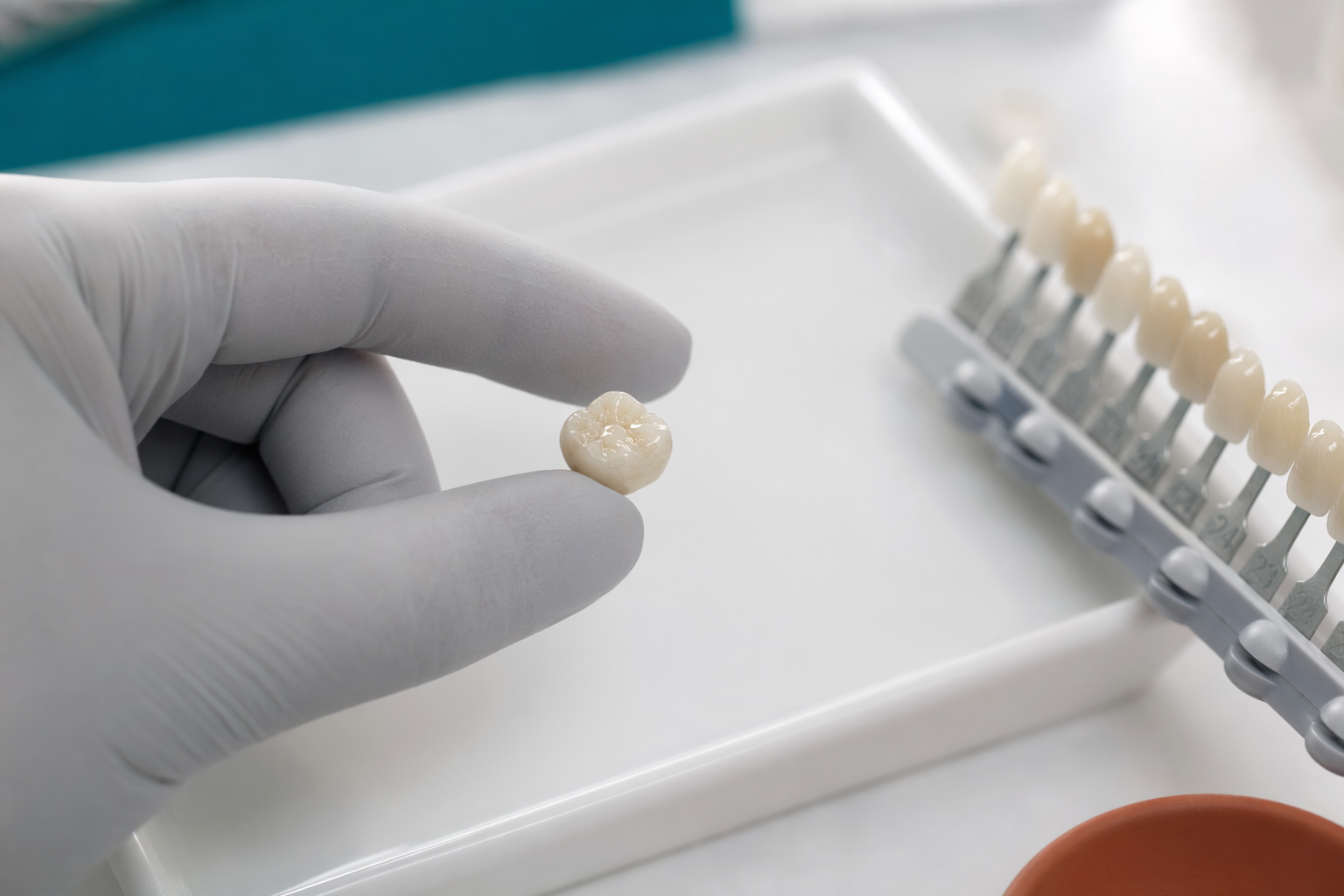
Short answer: most crowns cost hundreds to a few thousand dollars
A dental crown is a cap made to cover and protect a damaged tooth. In many US offices, a single crown is often somewhere around $900 to $2,500 per tooth. That range is general information only, not a quote.
Some offices may charge less for a basic crown, and some may charge more for premium materials, complex cases, or high-cost areas. The final number can change after an exam, X-rays, and a written treatment plan from a licensed dentist.
RestoreBite is a free matching service, not a dental practice. We do not provide dental care or quotes. We help people connect with licensed restoration dentists and prosthodontists near them, including in their preferred language, through get matched.

What changes the price
The biggest price difference is often the crown material. Porcelain or ceramic crowns can cost differently from metal or porcelain-fused-to-metal crowns. Labs, custom shading, and the office's fees also affect the total.
The tooth itself matters too. A front tooth may need more cosmetic work. A back tooth may need a stronger material because it takes more chewing force. If the tooth is badly broken down, the dentist may say you also need a core buildup or another supporting step before a crown can be placed.
Location matters. Costs in large cities or high-cost areas are often higher than in smaller towns. The same type of crown can have different prices from one ZIP code to another, which is why broad online ranges are never a guaranteed number.
What raises the total most often:
- Crown material and lab quality
- Front tooth versus back tooth
- Whether the tooth needs buildup or other preparation
- The dentist's training and local office costs
- Whether imaging, temporary crowns, or extra visits are billed separately
Costs that may be separate from the crown itself
When people ask, "How much is a crown?" they sometimes mean the full visit, but the crown may not be the only charge. A written treatment plan should show what is included and what is separate.
Common separate charges can include the exam, X-rays, scanning or impressions, a core buildup, removal of old crown material, or a temporary crown. If the tooth has a deep problem, a dentist may say other treatment is needed before a crown can be made. Only a licensed dentist who examines you can say that.
This is why a low advertised crown price can be misleading. Ask for the full written plan first, with each item listed clearly. If the total feels unclear, rushed, or much higher than expected, it is reasonable to pause and get a second opinion.
Insurance, payment, and how to compare prices safely
Dental insurance may lower the out-of-pocket cost for some people, but coverage varies a lot by plan, waiting periods, annual maximums, and whether the dentist is in network. Some plans cover only part of a crown, and some do not cover certain materials. Call your insurer to confirm details before treatment.
If you are paying yourself, ask for the full price in writing before you agree to start. You can compare offices, but compare the same type of crown and the same included services. A cheaper number is not always cheaper if it leaves out buildup, imaging, or temporary work.
Helpful questions to ask:
1. What type of crown is planned, and why that type?
2. What is the full estimated price before treatment starts?
3. What is included, and what could cost extra?
4. Will I get a written treatment plan and written estimate?
5. Is the dentist licensed in my state, and can I verify that license?
You can read more general price information on our costs page or learn how RestoreBite works on services.
Red flags when shopping for a crown
Be careful if an office gives vague pricing, pushes you to start the same day without time to think, or refuses to give a written treatment plan. Those are common pressure tactics. Big dental work should feel clear, not rushed.
Other warning signs include cash-only demands with no clear paperwork, no second opinion offered for a large plan, or a provider who is hard to verify through the state licensing board. It is fair to ask direct questions and take time before agreeing.
Red flags to watch for:
- A price is advertised, but the office will not explain what it includes
- Strong same-day pressure to begin treatment
- No written treatment plan or written estimate
- No clear answer about materials or extra fees
- Cash-only pressure without normal documentation
- The license is difficult to verify
If you are facing a bigger or expensive restoration plan, get a second opinion. If you have a true dental emergency, such as uncontrolled bleeding, severe swelling, high fever, or a knocked-out tooth, seek urgent or emergency care first. For general help understanding restoration options, see help.
A crown often costs about $900 to $2,500 per tooth in the US, but the real price depends on the material, the tooth, the work needed, and your area, so get a written plan and verify the dentist's license first.
Common questions
Why is one dentist's crown price much higher than another's?
The price can change based on the crown material, the tooth being treated, lab work, local costs, and whether other steps are needed before the crown. Ask for a written plan so you can compare the same services, not just one number.
Is a $500 crown real?
Sometimes a very low advertised price is real for a limited situation, but it may not include exams, X-rays, buildup, temporary work, or certain materials. Ask what is included and get the full written estimate before agreeing.
Does insurance pay for crowns?
Some dental plans pay part of the cost, but coverage depends on the plan, waiting periods, annual limits, and network rules. Check with your insurer for your exact benefits.
Can RestoreBite tell me exactly what my crown will cost?
No. RestoreBite is a free matching service, not a dental office, and we do not give quotes or dental advice. We can help you connect with a licensed restoration dentist or prosthodontist near you through [get matched](/get-matched/).
What information do I need to give RestoreBite?
Only basic contact and matching details: your name, phone, optional email, ZIP code, the restoration type you are asking about, and your preferred language. We do not ask for medical or dental history, medications, insurance numbers, bank information, or Social Security numbers.