Quick answers
Immediate vs conventional dentures
Immediate dentures are placed right after teeth are removed. Conventional dentures are made after the gums heal. The faster choice is not always the simpler or cheaper one.
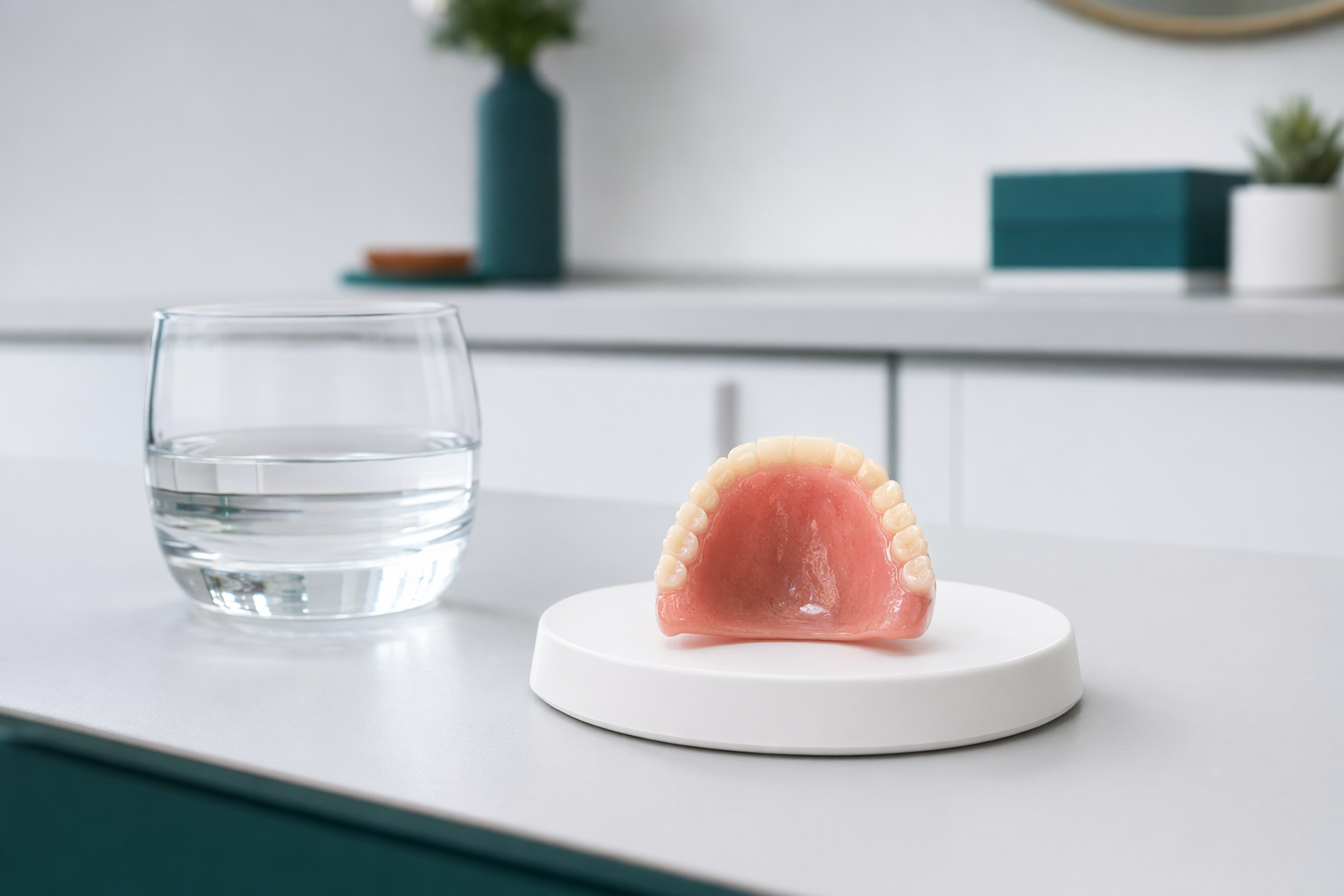
Short answer: what is the difference?
Immediate dentures are usually made before the remaining teeth are removed and placed the same day or soon after. The main benefit is that you do not go without teeth during the first healing period.
Conventional dentures are usually made after the mouth has healed more fully from extractions. This often means waiting weeks or months, but the fit can be more stable because the gums and bone have already changed shape.
Neither option is "better" for everyone. The right choice depends on how many teeth are being removed, how your mouth heals, the materials used, and what your dentist sees on exam and X-rays. This is general information only, not treatment advice.

Why people choose immediate dentures
People often choose immediate dentures because they want teeth in place right away for work, family life, or confidence. For some people, that matters a lot.
The trade-off is fit. After teeth are removed, gums and bone shrink as healing happens. That means immediate dentures often loosen fairly quickly and may need adjustments, soft relines, a reline later, or in some cases a remake.
Immediate dentures can also make the first weeks feel more complicated because healing and learning to wear a new denture happen at the same time. Some people do fine with that. Others find it tiring.
If you are comparing options, ask for a written plan that says what is included: extractions, the denture itself, follow-up visits, temporary liners, relines, and whether a later replacement may be needed.
Why people choose conventional dentures
Conventional dentures are usually started after the extraction sites have healed more. Because the mouth shape is more settled, the denture may fit better from the beginning and may need fewer early adjustments.
The main downside is the waiting period. Depending on the plan, you may be without teeth for some time, or you may need another temporary arrangement while healing finishes.
Some people prefer conventional dentures because they want to avoid paying for a denture that may need more changes soon after delivery. Others do not want to be without teeth and accept the extra adjustment process of immediate dentures. Both concerns are reasonable.
A licensed dentist or prosthodontist should explain the timeline clearly, including what the gums are expected to do during healing and what follow-up is normal.
Cost: what usually changes the price
In many parts of the US, a full immediate denture may fall roughly in the same broad range as a conventional full denture at the start, but the total cost can be higher if immediate dentures need more follow-up work. A common broad range for a full upper or full lower denture is about $1,000 to $4,000+ per arch, with economy options sometimes lower and premium materials or more complex cases higher. Extractions, relines, tissue conditioners, and later remakes can add to the total. These are not quotes.
The real number depends on the material, the number of teeth involved, the condition of the mouth, whether teeth are being removed, how many visits are needed, and the area of the country. Costs also vary by office and by who is making and adjusting the denture.
If you want more background on pricing, see costs. Before agreeing to treatment, ask for the full written price, not just the "starting at" number.
Red flags to watch for:
- vague pricing with no written breakdown
- pressure to start the same day without time to review the plan
- no written treatment plan
- no second opinion offered for a big case
- cash-only demands without clear paperwork
For larger plans, it is smart to verify the dentist's license in your state and get a second opinion.
Questions to ask before you decide
A careful consultation should leave you understanding the timeline, the likely adjustments, and what happens if the denture loosens as healing continues. RestoreBite is a free matching service, not a dental practice, and we do not provide dental care. We can help you connect with a licensed restoration dentist near you and in your language through get matched or explain the process in help.
Bring a short list of practical questions:
1. Am I being shown an immediate option, a conventional option, or both?
2. How long is the expected healing period in this office's process?
3. What follow-up visits are included in the price?
4. Are soft relines, hard relines, or remakes included or separate?
5. What will I likely pay for extractions, if needed?
6. Who will make and adjust the denture?
7. Can I have the treatment plan and full price in writing before I decide?
You can also ask whether the dentist offering the plan commonly handles denture cases or whether a prosthodontist is involved. If you want general information on restoration options before you talk to a dentist, see services.
Immediate dentures give you teeth sooner, but conventional dentures may fit more predictably after healing, so get both the timeline and the full written price before you decide.
Common questions
Are immediate dentures more expensive than conventional dentures?
They can be, especially if you count the extra adjustments, relines, or a later remake that may be needed as the mouth heals. The only reliable way to compare is to get a written treatment plan and written price for each option.
Do immediate dentures fit worse?
They often become loose sooner because the gums and bone change shape after extractions. That does not mean they are wrong for everyone, but it does mean follow-up matters.
How long do you wait for conventional dentures?
The wait varies by person and by office process, often several weeks to a few months after extractions. A licensed dentist who examines you can explain the likely timeline for your situation.
Can I sleep in immediate dentures?
Your dentist may give specific instructions after extractions, but this page cannot tell you what to do for your own case. Follow the instructions from the licensed dentist treating you and ask for them in writing if anything is unclear.
What if I have severe pain, swelling, or bleeding after tooth removal?
That needs prompt attention from the treating dental office or urgent care. For uncontrolled bleeding, severe swelling, high fever, or other urgent symptoms, seek emergency care right away.
Can RestoreBite tell me which denture type I need?
No. RestoreBite is a free matching service, not a dental practice, and we do not diagnose or recommend treatment. We only help connect you with a licensed restoration dentist or prosthodontist near you.