Quick answers
What are partial dentures?
Partial dentures are removable appliances that replace one or more missing teeth and help restore chewing and speech. This guide explains how they work, common trade-offs, and what to ask a licensed dentist.
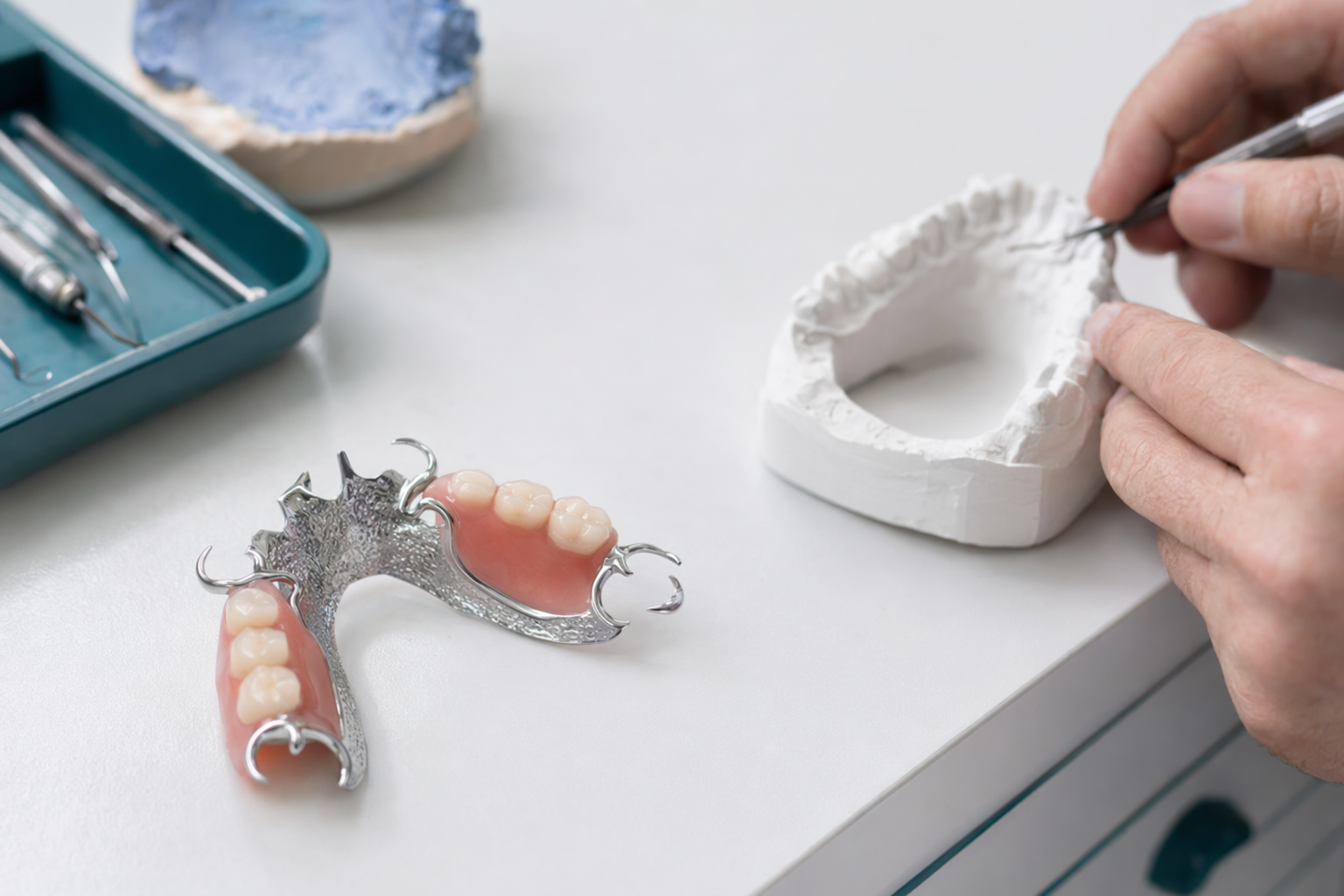
Quick answer: what partial dentures are
Partial dentures are removable dental restorations used when you are missing some teeth but still have some natural teeth left.
They attach to the remaining teeth (often with clasps or other connection parts) to help the denture stay in place. The denture may be made with different materials, and the design depends on how many teeth are missing and where they are.
Important: RestoreBite is a FREE matching service, not a dental office. We can help connect you with licensed restoration dentists/prosthodontists near you, but we do not provide dental care or diagnose your situation.

How partial dentures typically work (plain-language)
Think of a partial denture as a custom “replacement set” supported by your remaining teeth.
- The dentist looks at your mouth and remaining teeth to plan where the denture will sit.
- They make a denture base and replacement teeth.
- They create connection parts that help the denture attach to your existing teeth.
- You practice wearing it, and follow cleaning instructions to keep both the denture and your remaining teeth healthy.
Because partial dentures are removable, you usually take them out for cleaning. Some people adjust slowly—comfort and fit often improve with time and follow-up visits.
Common trade-offs: benefits and what to watch for
Partial dentures can help replace missing teeth for chewing, speaking, and a more complete smile. They are often one of the more flexible restoration options because they can be adjusted as needs change.
Trade-offs to consider:
- Comfort and fit may need adjustments, especially at first.
- The denture can feel bulky to some people.
- Your remaining teeth may need to be healthy and stable because the denture relies on them for support.
- If the mouth changes over time, the denture may need relining or replacement.
A licensed restoration dentist/prosthodontist can explain what is realistic for your case after an in-person exam.
Cost basics: what partial dentures usually cost (ranges, not quotes)
Partial denture costs vary widely in the United States. The real price depends on materials, the number of teeth being replaced, how the partial connects to your remaining teeth, needed prep work, and your local area.
Typical range (not a quote):
- Conventional removable partial dentures: roughly $1,000 to $3,500+ per arch
- More complex designs or upgraded materials: can be higher
Additional costs may apply for impressions/records, follow-up visits, adjustments, or repairs. If relining or a remake becomes needed later, that can add cost.
If someone gives you a “final” price without a written plan and itemized explanation, ask questions. Pricing should be based on an in-person evaluation.
How to choose a licensed dentist and avoid red flags
Because partial dentures can affect comfort, function, and the health of your remaining teeth, it’s worth choosing a licensed professional who does restoration work.
- Verify the dentist/prosthodontist is licensed in your state.
- Ask for a WRITTEN treatment plan and the full price for each step (including adjustments/repairs if they’re expected).
- Ask what materials will be used and why.
- Ask how long the process may take (appointments and lab time).
- If the plan is big or expensive, consider a second opinion.
Red flags to avoid:
- Vague pricing or “trust me” estimates with no written breakdown
- Pressure to start the same day
- No written plan or no clear description of materials
- Cash-only pricing without itemized documentation
RestoreBite can help you get connected with licensed restoration providers near you (free for you). Start here: Get matched with a restoration dentist.
What to expect at the first visit (what to ask)
Your first appointment is usually about evaluation and planning. The dentist may discuss options for replacing missing teeth and how a partial denture would attach and fit.
You can ask clear, practical questions like:
- What type of partial denture design do you recommend for my situation, and what are the trade-offs?
- What materials are you using?
- What is the step-by-step timeline?
- What will the total cost be, and what is included in that price?
- What follow-up adjustments should I expect, and is there an additional charge?
- If my mouth changes later, what repair or relining steps might be needed?
For more help choosing next steps, see How RestoreBite works and Dental restoration costs. If you need support, visit Help.
Partial dentures are removable restorations for when you’re missing some teeth, and the best fit, comfort, and total cost depend on materials, design, and your mouth—so ask for a written plan and verify the provider’s license.
Common questions
Are partial dentures the same as full dentures?
No. Full dentures replace all teeth on an arch, while partial dentures replace only some missing teeth and rely on remaining teeth for support.
Do partial dentures come out every day?
They are designed to be removable, and many people remove them for cleaning. Your dentist will explain the specific routine that fits your design and comfort needs.
Will I still have to pay for adjustments later?
Often there are follow-up adjustments, but policies vary. Ask for a written plan and a clear statement of what adjustments/repairs are included and what may cost extra.
Are partial dentures covered by insurance?
Sometimes, but coverage depends on your plan and your location. Ask the dental office to explain what they expect insurance may cover—while remembering that your final coverage rules are determined by the insurer.
How do I get a restoration dentist near me?
RestoreBite is a free matching service. Share your ZIP and that you want help with partial dentures, and we can connect you with licensed restoration providers in your area: [Get matched](/get-matched/).